Scaling supply in collaboration with customers at Newsflare
Product architecture • Experience design • User research
Overview
I led the end-to-end redesign of Newsflare’s video ingestion systems, unifying manual and automated contributor journeys. From identifying partner friction to defining a new ingestion model, I launched a fully automated MRSS pipeline for content partners, a first for the company, alongside a redesigned, mobile-first upload experience for on-the-ground contributors.
Involvement
What: Project and design lead
When: ~3 month duration
With: Sketch, Trello, Google Analytics
Impact
+50%
Increase in median monthly uploads from professional contributors (Chasers)
+200%
Increase in uploads from Content Partners after adopting the newly built pipeline.
0 → 1
Conceived from a blank slate, validated with partners, scoped across engineering and product, and delivered as a new cornerstone of Newsflare’s content platform.
The Challenge
Newsflare is a video marketplace connecting public filmers to media buyers across news, entertainment, and advertising. But while demand was strong, the upload experience couldn’t scale, especially for high-value contributors like Content Partners and professional filmers (Chasers).
Uploads were slow, fragmented, and manual. As both Design Lead and Product Manager, I was tasked with reimagining this journey from the ground up to scale contribution, retain high-value users, and future-proof the upload experience.
To summarise:
Fragmented architecture: Multiple upload flows with duplicated tech debt made iteration nearly impossible.
Mobile-first audience, desktop-first design: 90% of uploads came from mobile, yet the experience was not optimised.
Zero feedback loops: Filmers described uploading as “throwing videos into a black hole.”
Lack of product-market fit clarity: Newsflare had never defined core filmer segments or how their needs differed.
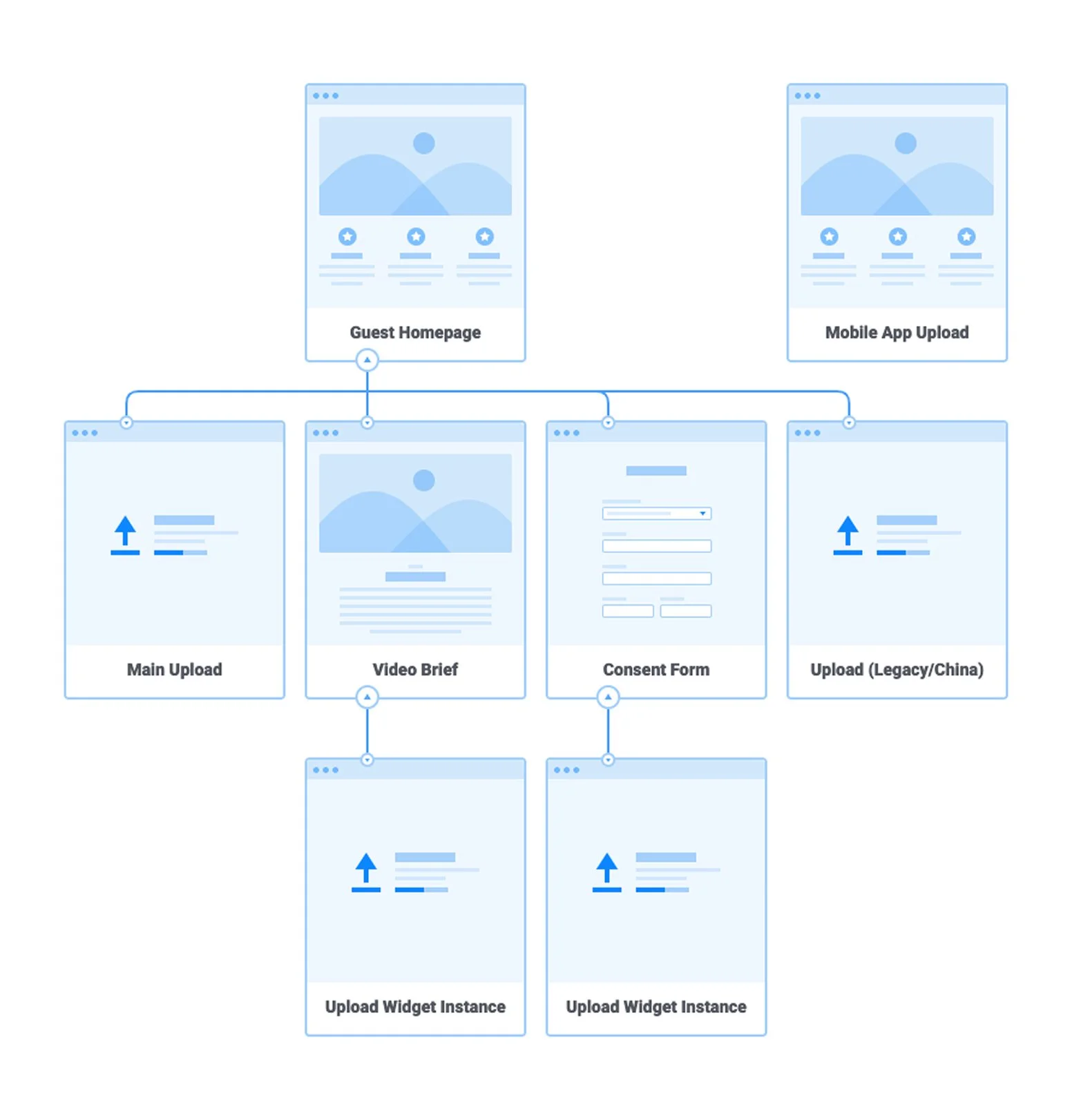
Practically speaking there were five upload processes when the work began. These generated an incredible amount of inconsistency and tech-debt.
The Approach
Early on their were a few crucial opportunities that I wanted to make the most of:
Scale video ingestion from both manual and automated sources
Prioritise high-value filmer types
Consolidate and modernise the upload journey
Build a flexible architecture that could adapt across verticals and ingestion points
We began by speaking directly with our users—through interviews, focus groups, surveys, and buttressing the insights that came out of these through a review our platform analytics informed by the feedback we got from our qualitative research.
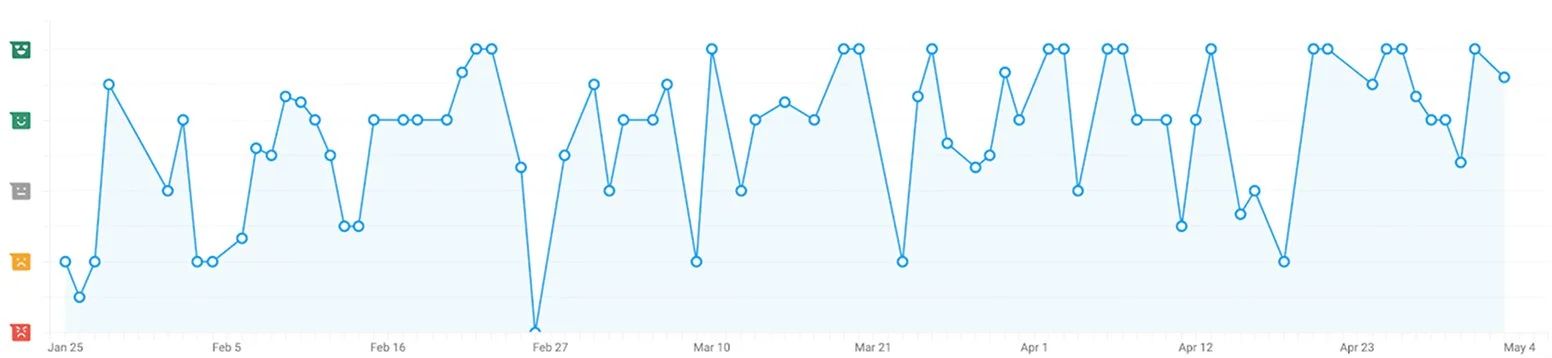
I started recording sentiments of users regularly uploading video to the platform in addition to a review of platform analytics.
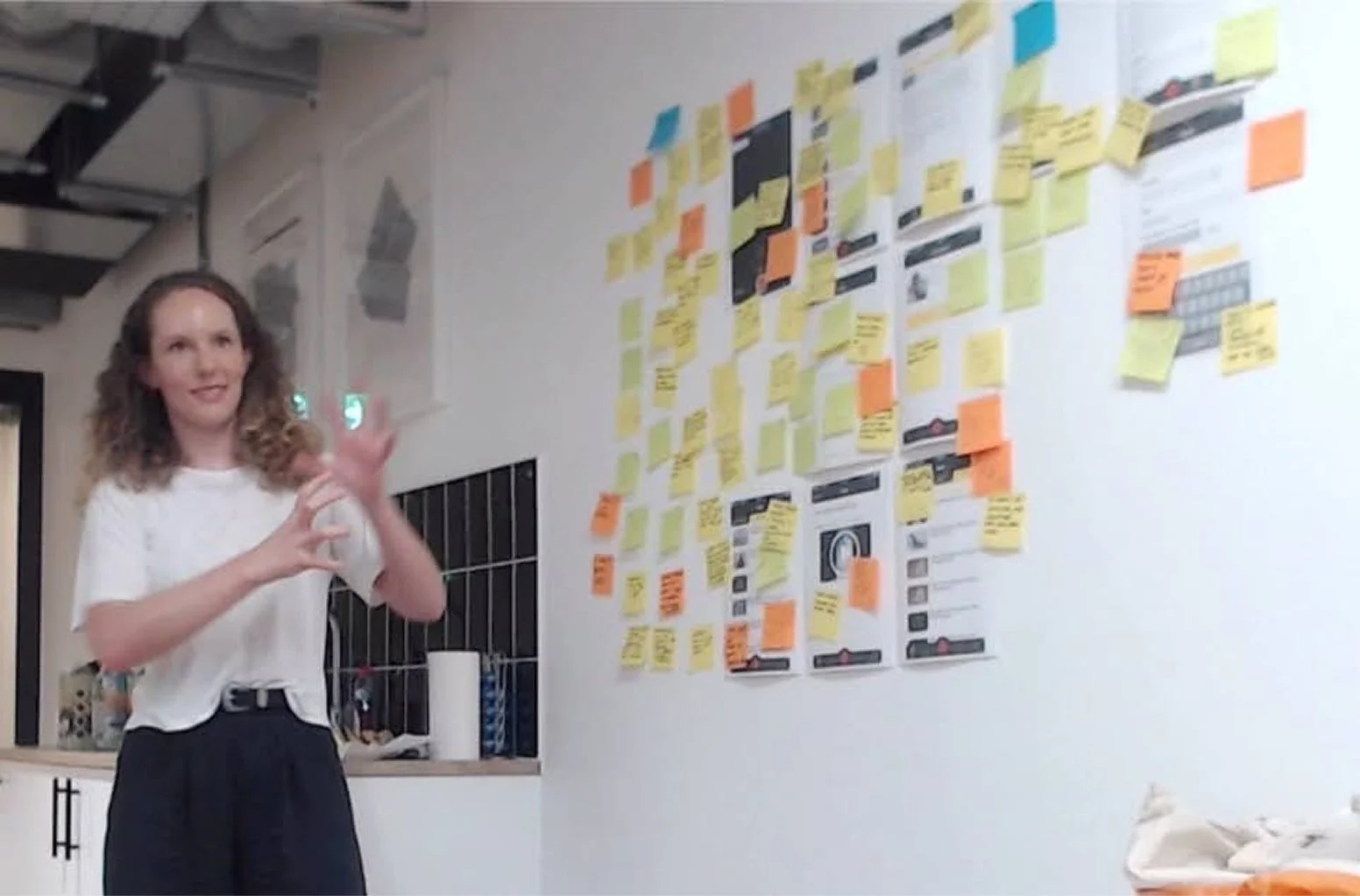
As part of this I gathered perspectives on customer attitudes towards submitting video to Newsflare, both in group settings and one-on-one interviews.
Doing this we identified four filmer archetypes:
-
Primary need: Opportunistic earnings
Upload volume: Low
-
Primary need: Reliable income
Upload volume: High
-
Primary need: Audience and platform growth
Upload volume: Moderate
-
Primary need: Sales and syndication
Upload volume: Very high
I then ran a product-market fit survey across each segment to seek out if any segment had a >40% PMF threshold. When I did this, we realised that not only were Chasers and Content Partners disproportionately valuable, but they were also really sold on the value of Newsflare. It turned out chasers in particular were key to Newsflare securing a defensible supply base.
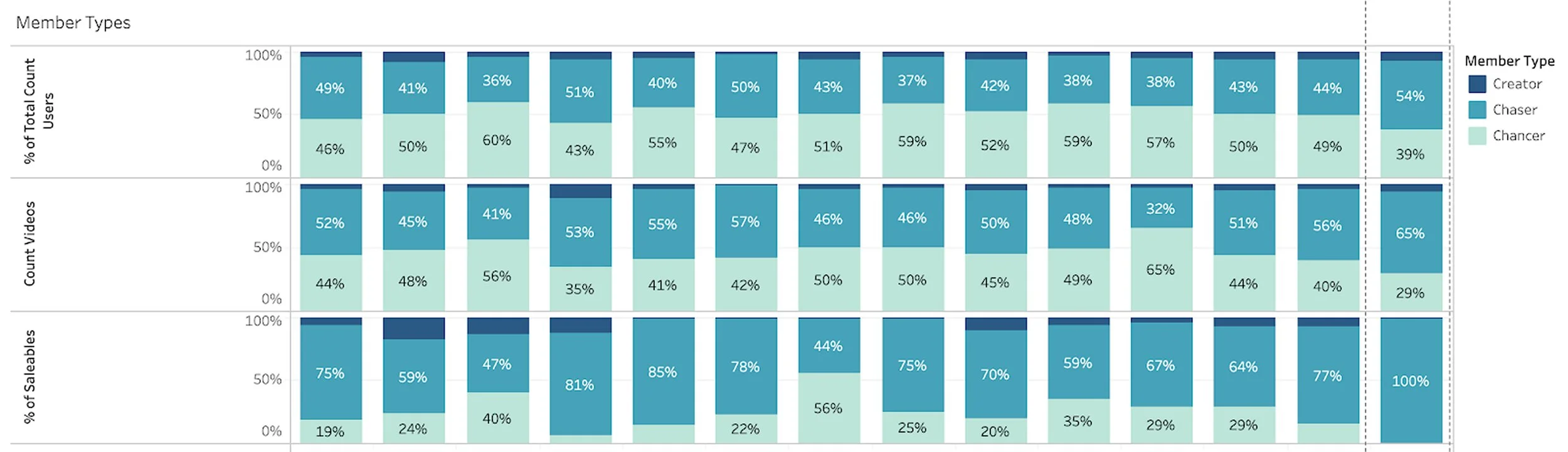
We then summarised comments from key customer segments who responded positively to the PMF surveys we sent out to the user base.
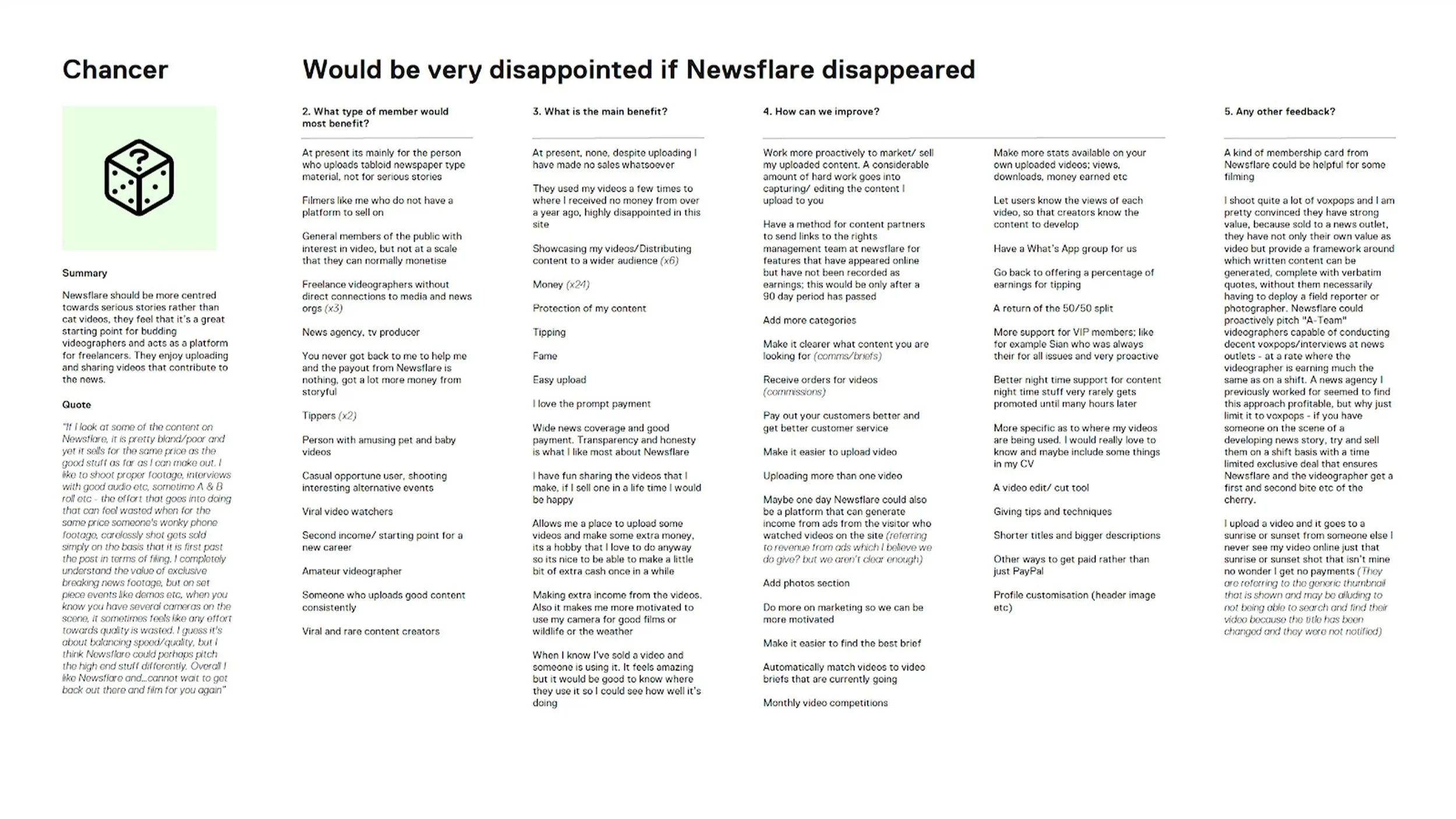
“I like to shoot proper footage, interviews with good audio, etc, sometimes A & B roll, etc. The effort that goes into that can feel wasted when, for the same price, someone’s wonky phone footage that’s carelessly shot gets sold simply because it’s first past the post.”
Newsflare Chaser
Solution
I then oversaw the end-to-end redesign of the upload experience for both Chasers (manual) and Content Partners (automated), two tracks running in parallel, but each requiring a fundamentally different strategy.
Solution 1: MRSS Uploads for Content Partners
Challenge
Partners wanted to upload thousands of videos but lacked the time or UI to do so.
Iteration
Initial UI prototypes for scale upload failed. We went back to user interviews, and discovered many partners already used MRSS feeds internally. This was the breakthrough.
A very early prototype design, not finalised.
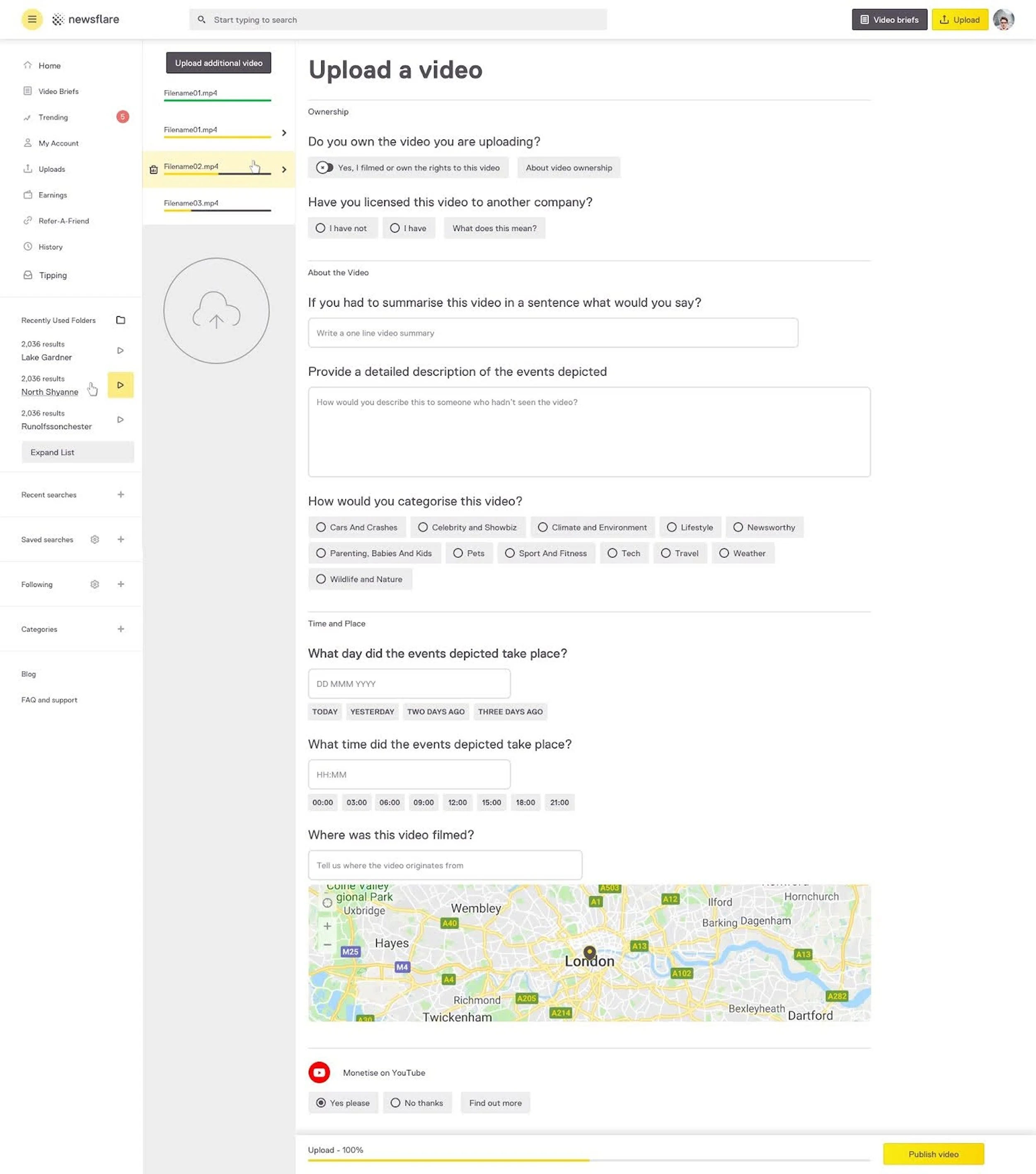
Implementation
I designed and launched a new ingestion architecture that scraped MRSS feeds and imported video libraries directly into Newsflare. I prototyped it alongside a single partner, then scaled it across our supply pipeline.
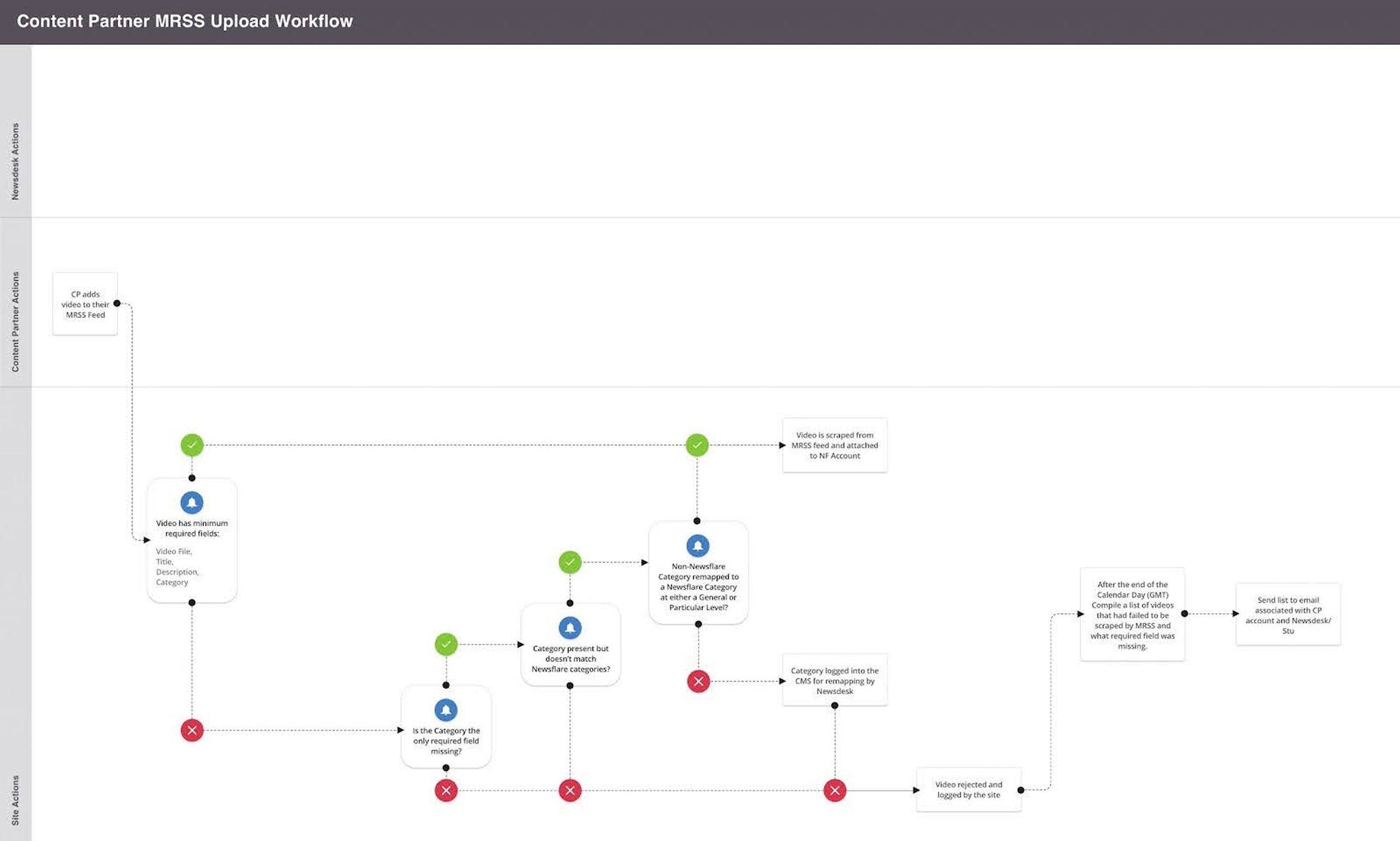
The first, very basic, flow I sketched out for the MRSS Feed.
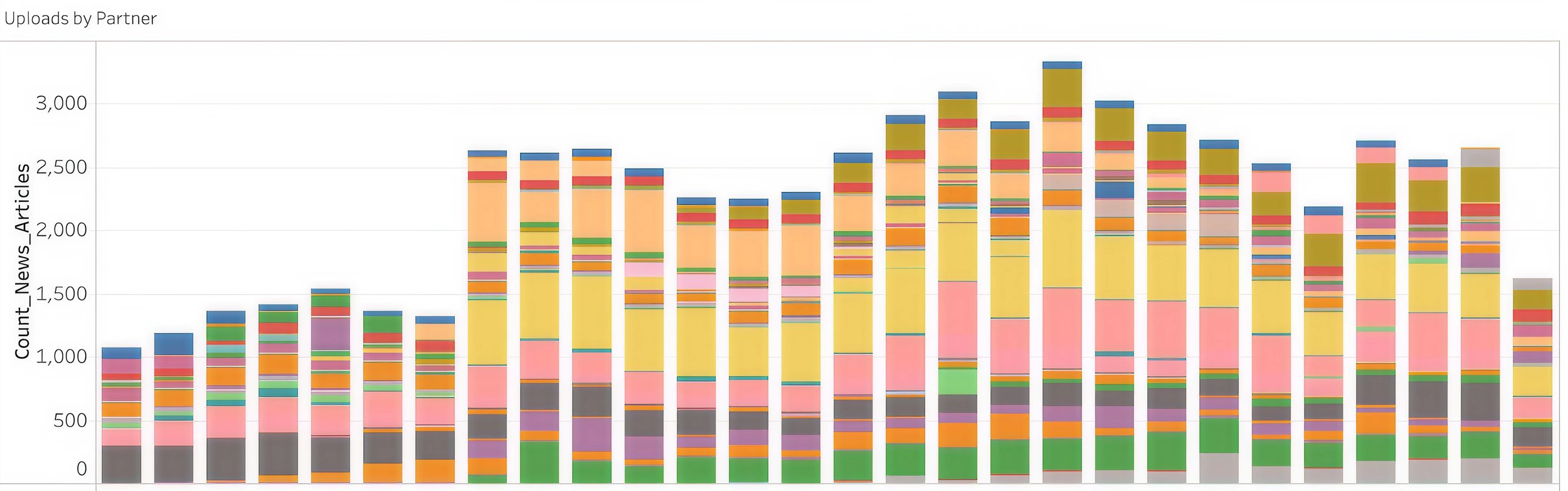
The jump in uploads reflects the impact the MRSS Feed release had on video intake from Content Partners.
Impact
Order-of-magnitude scale: Enabled bulk ingestion without human intervention.
Became the cornerstone of supply: Adopted as the primary supply strategy for the following year.
New partners onboarded: Lowered friction dramatically, opening doors to contributors previously deterred by manual uploads.
Industry edge: No other competitor offered this kind of automated syndication feed at the time.
Solution 2: Redesigning Video Upload for Chasers
Challenge
Chasers contributed ~35% of saleable video but were hampered by friction, repetition, and lack of feedback.
Tests & Experiments
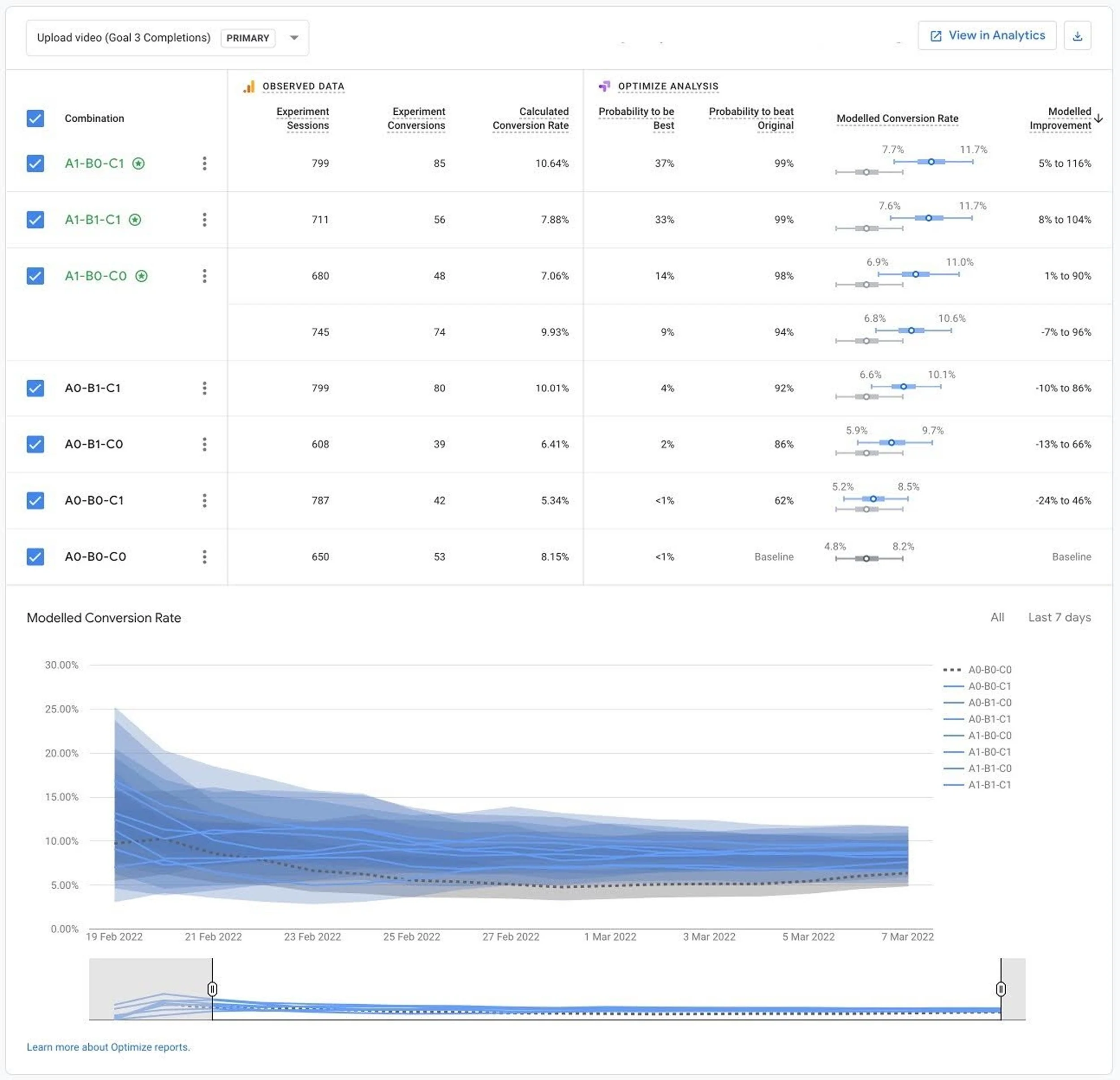
I ran multiple iterative experiments to optimise the existing experience, reducing friction and increase clarity, including:
Strength indicators based on title quality
Auto-tagging based on metadata
Input presets for mobile
Reusable fields across uploads
Language simplification for EASL speakers
This multivariate test produced several variants that outperformed the control, revealing the levers that mattered most and shaping the next round of experiments.
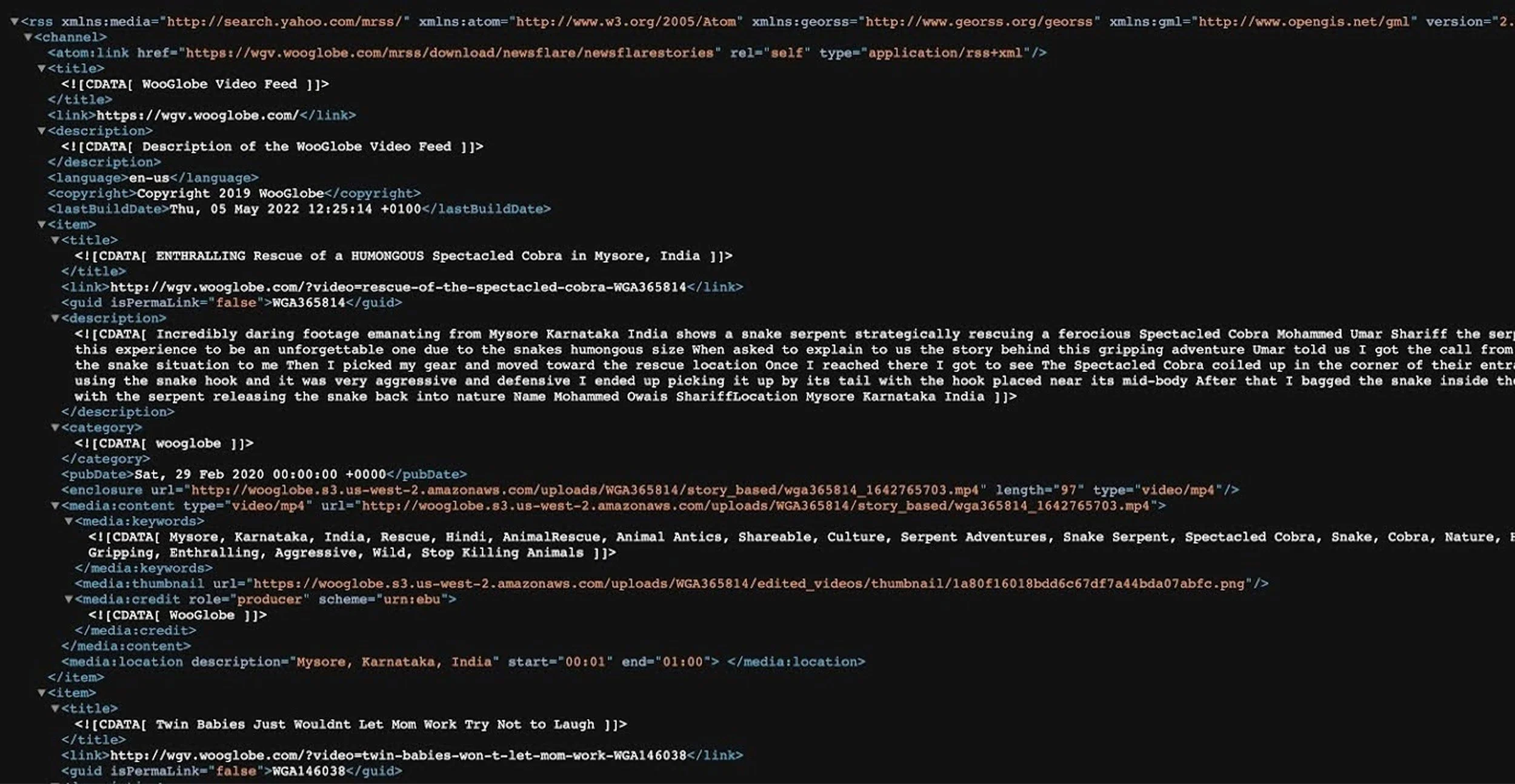
The initial MRSS Feed from the Content Partner I worked with to prototype the initial upload feed.
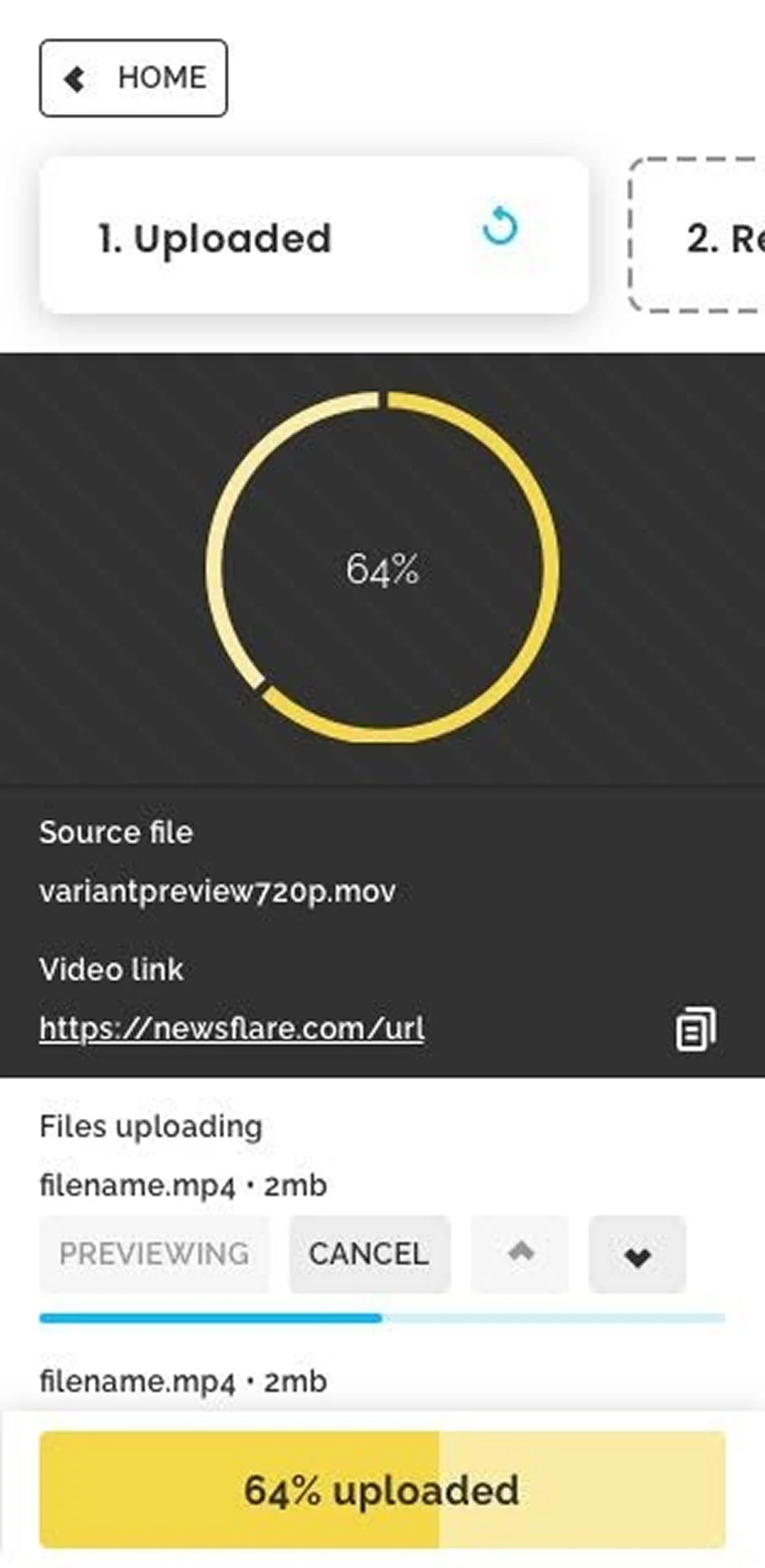
We also redesigned the page mobile-first, chunking inputs, removing redundant features, and creating pre-upload and post-upload experiences to bookend the journey with clarity and encouragement.

Flow Mapping
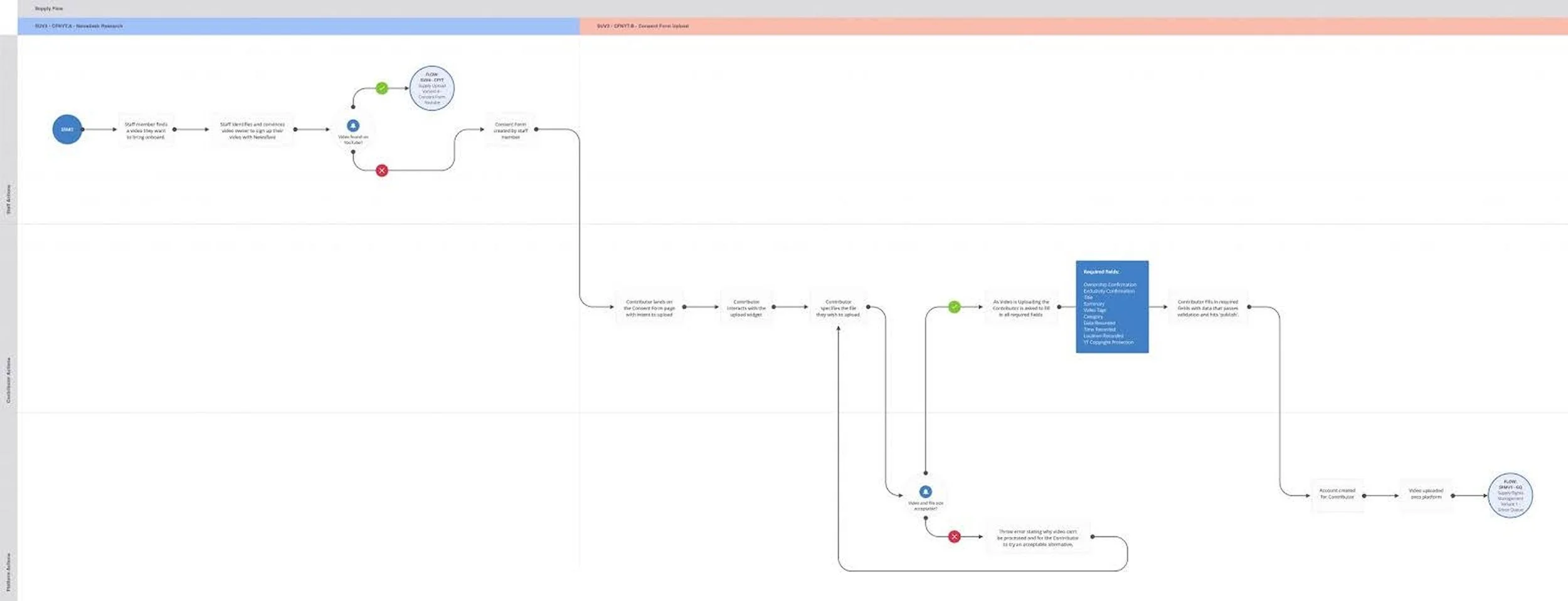
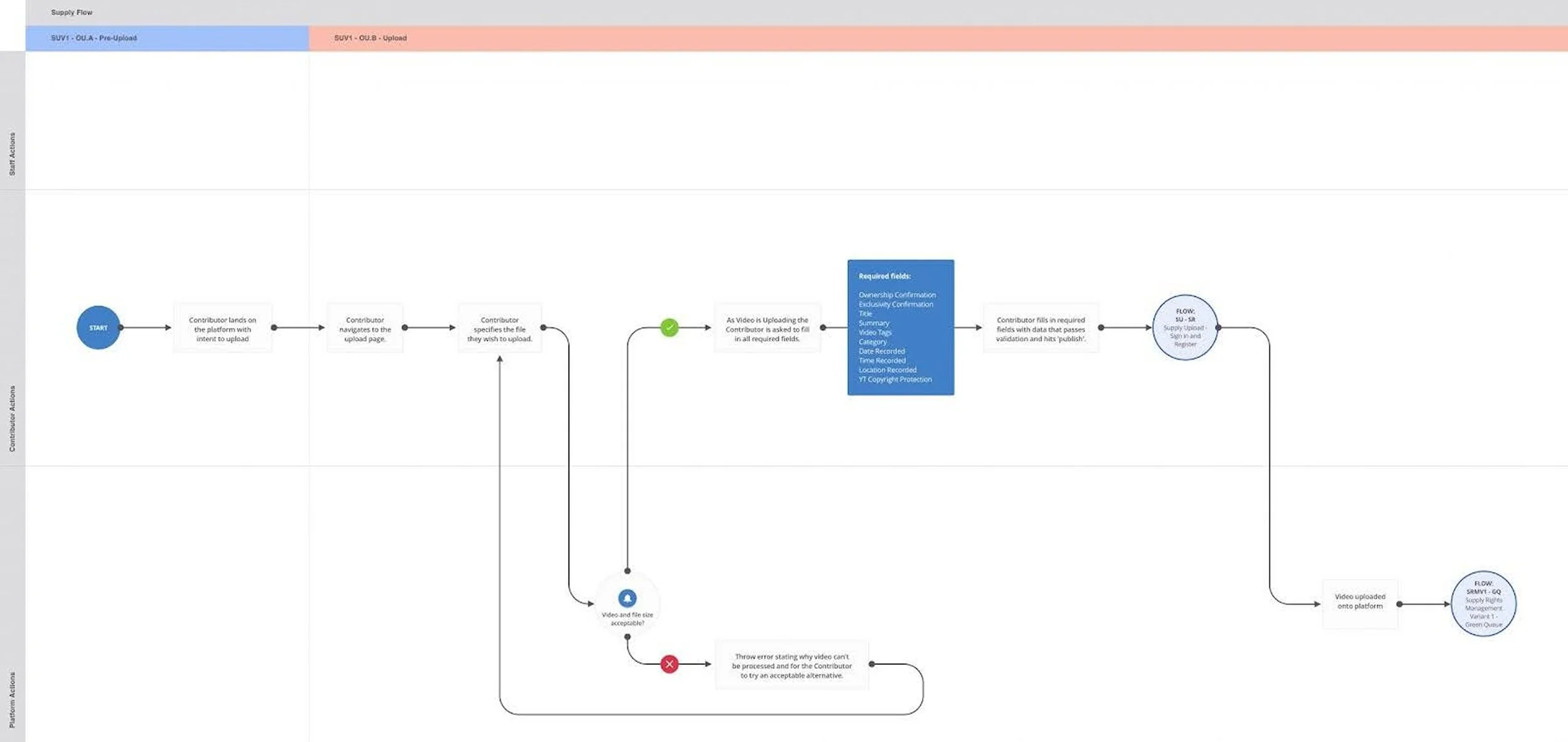
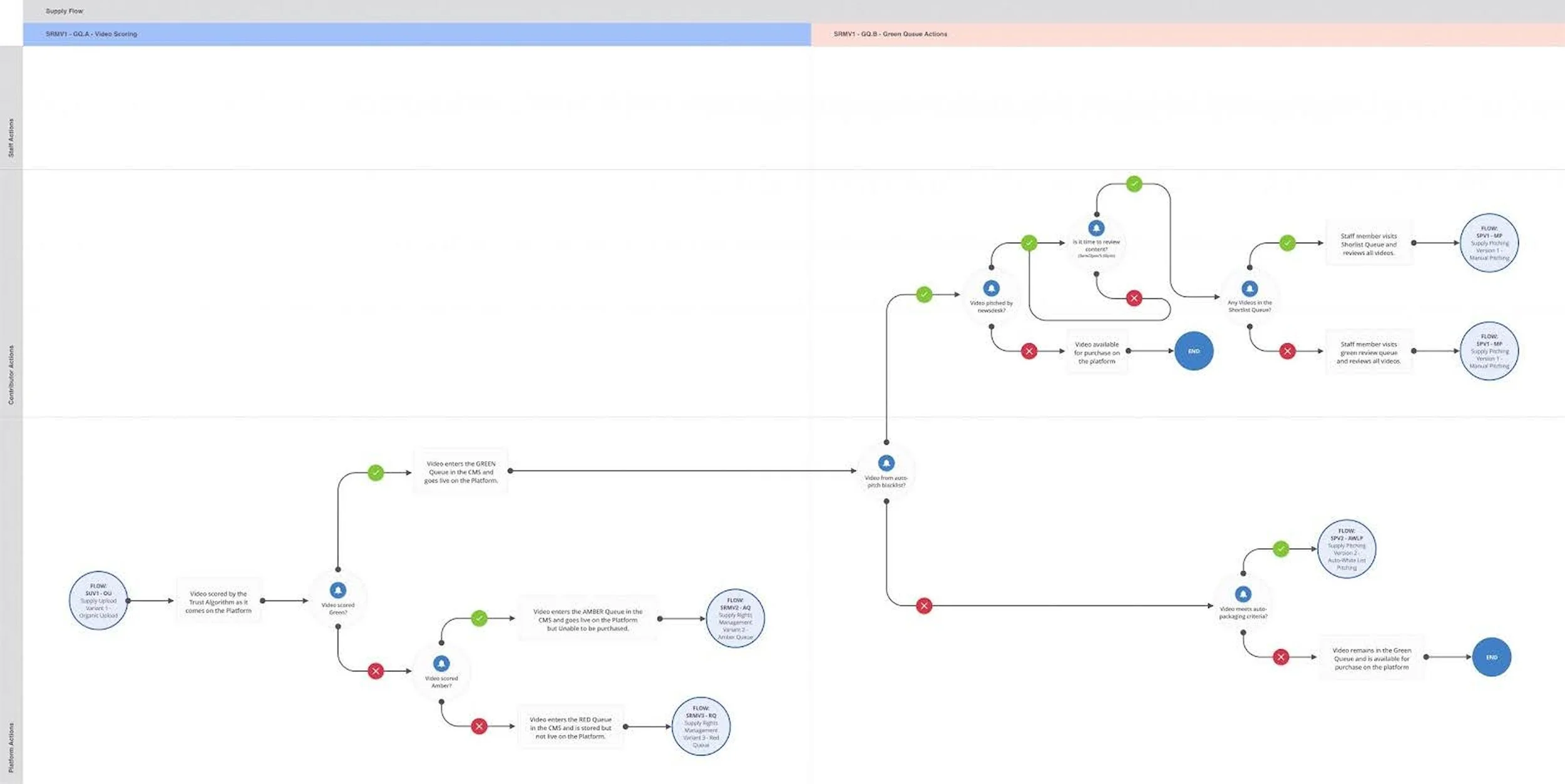
I then mapped the multiple upload and post-processing journeys to consolidate all entry points and reduce duplication. Pushed toward a single injectable upload instance across the platform, modular, flexible, and maintainable.
This massively cut down technical debt and increased the operational effectiveness of the platform with a corresponding increase in median monthly uploads from key customer segments.
Revised default upload flow
Consolidated post-upload flow
Future Opportunities
During testing, we uncovered a critical barrier: Chasers filmed more than they uploaded due to repetitive metadata entry on mobile.
To solve this, I prototyped a one-to-many model: allowing multiple videos to share a single metadata set. This experiment led to a 7x increase in uploads during testing.
This unlocked multiple future growth avenues:
Publishing spread across sessions, apps, and devices
Automation and bots to handle content submissions on 3rd party apps popular with key filmer segments like Telegram.
Varied metadata requirements based on category/location
Abandoned upload recovery (similar to e-comm cart recovery)
Timeline-style uploads for multiple videos depicting a single event.
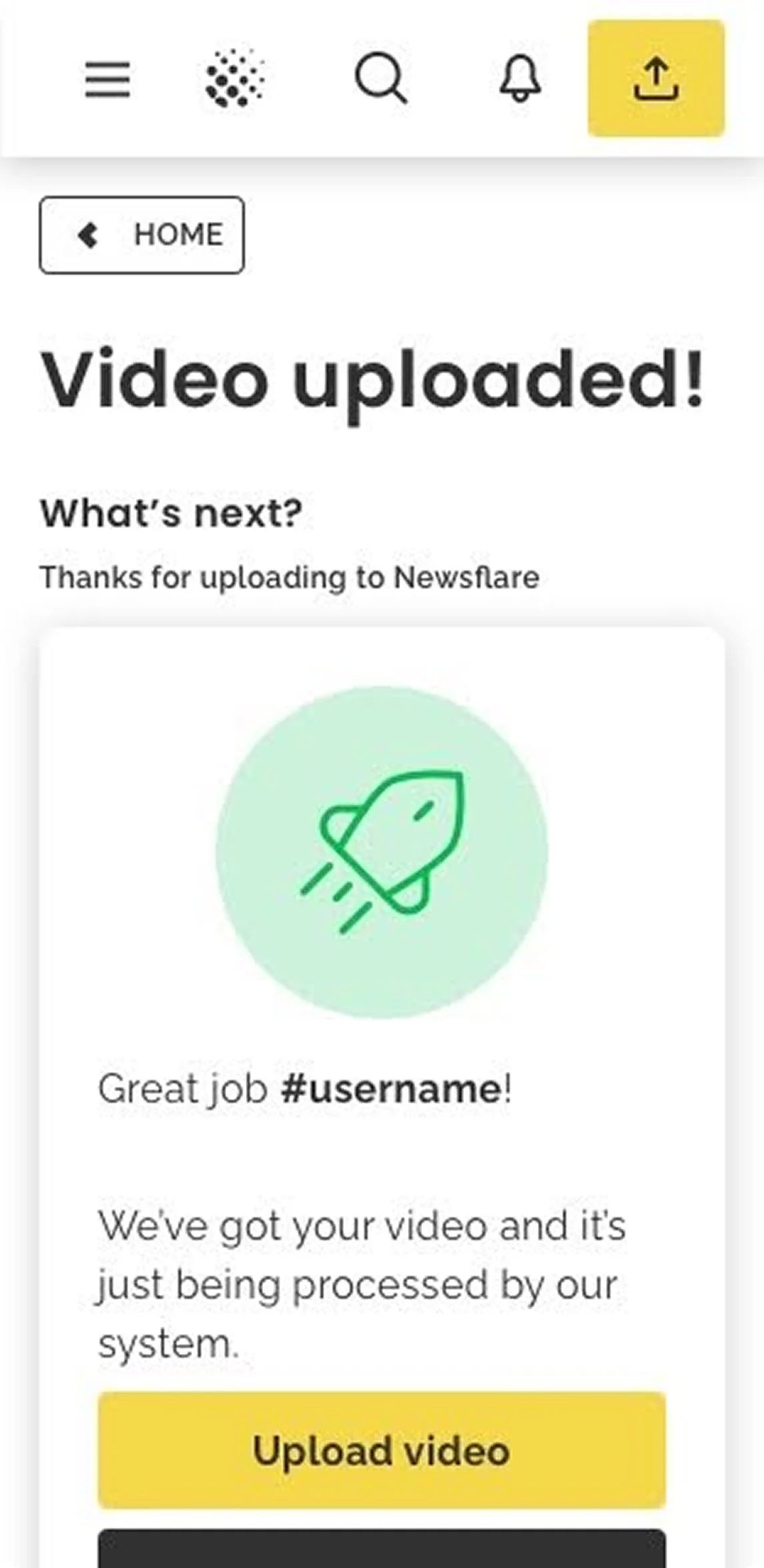
Revised outboud/consent form flow
The Outcome
The changes led to sizeable quantitative, operational, and attitudinal gains for Newsflare. These included:
50% increase in monthly uploads from Chasers. (Median. 2.4 → 3.6)
>200% Increase in monthly uploads from Content Partners.
This radically improved the upload experience for both the business and our suppliers. Dramatically increasing the amount of saleable video now available to be passed on to buyers.
We also had clear avenues to explore how to further scale video supply amongst our core, non-Partner, suppliers, thanks to earlier experiments.
Improving the supply of Chaser video was strategically crucial to scaling a defensible supply base. Whilst we relied disproportionately on Content Partners, the loss of even one was always a big blow. Continuing to invest in improving the Chaser experience, therefore, a clear natural next step.
What I learned
Product architecture reflects product strategy: How you structure ingestion shapes your entire value chain.
Scaling supply requires segmentation: Treating all uploaders the same was holding Newsflare back.
Automating value creation isn’t a nice-to-have; it’s essential when operating a media marketplace at scale.
Consistent 8+/10 CSAT scores in usability testing.
Collapsed 5 distinct user journeys, each with its own upload funnel, into a single experience, reducing technical overheads and increasing operational efficiency.