How research-led design doubled video supply from key customer segments
OverviewI led the end-to-end redesign of Newsflare’s video ingestion systems, unifying manual and automated contributor journeys. From identifying partner friction to defining a new ingestion model, I launched a fully automated MRSS pipeline for content partners, a first for the company, alongside a redesigned, mobile-first upload experience for on-the-ground contributors.
GoalsScale video ingestion from both manual and automated sources
Prioritise and identify high-value filmer types
Modernise the video upload journey
Suggest a flexible architecture that could adapt across verticals and ingestion points
Project and Design LeadRoleQ2 2022WhenEngineering, Video Desk, Sales, Customer SupportCollaboratorsContext and Team
Newsflare is a video marketplace connecting videographers and members of the public to media buyers across news, entertainment, and advertising. It was both a B2C and B2B business.
At the time I was both Product and Design Lead at the company and worked closely with Design, Engineering, Customer Facing Teams and Senior Leadership to deliver the project. Whilst I had a greenlight to investigate the problem, every solution had to justified to the Senior Leadership based on it’s ability to unblock the flow of video for the business.
The Problem
While buyer demand was strong, Newsflare’s upload experience for suppliers was struggling to scale, especially for a small number of high-value contributors who were joining in increasing numbers.
Uploads were slow, fragmented, manual and not optimised for mobile devices. Multiple journeys existed. As both Design Lead and Product Manager, I was tasked with finding a comprehensive answer to the problem of opening up the supply bottleneck, particularly for high value users.
To summarise:
Fix fragmented architecture: Multiple upload flows with duplicated tech debt made iteration nearly impossible.
Mobile-first audience, desktop-first design: 90% of uploads came from mobile, yet the experience was not optimised.
Zero feedback loops: Filmers described uploading as “throwing videos into a black hole.”
Lack of product-market fit clarity: Newsflare had never defined core filmer segments or how their needs differed.
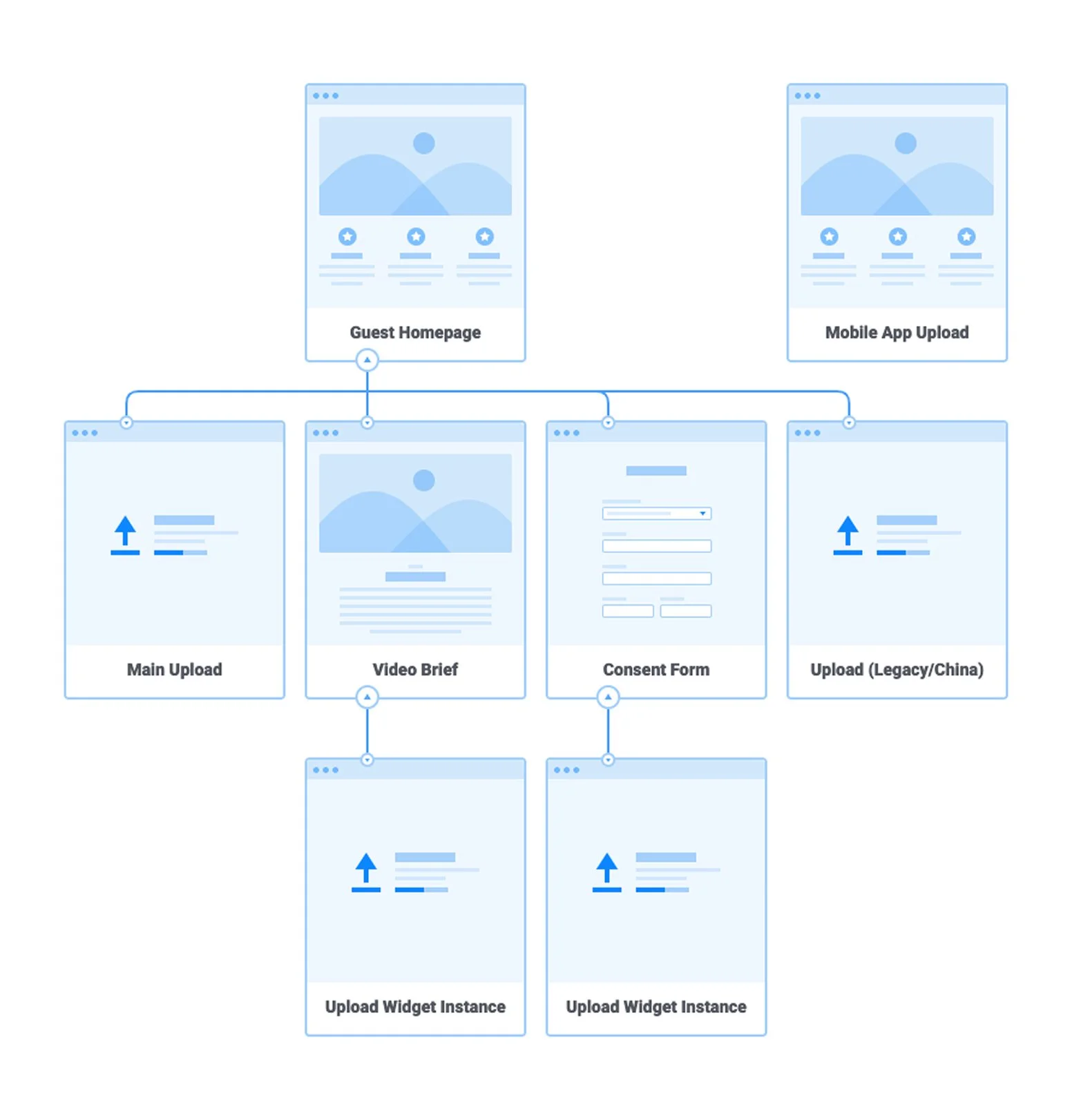
Practically speaking there were five upload processes when the work began. These generated an incredible amount of inconsistency and tech-debt.
Research and Insight
When the project began I started speaking directly with our users—through interviews, focus groups, surveys, and contextualising their attitudes and perspectives through a review our platform analytics and the sales rate of key customer segments.
-
Primary need: Opportunistic earnings
Upload volume: Low
-
Primary need: Reliable income
Upload volume: High
-
Primary need: Audience and platform growth
Upload volume: Moderate
-
Primary need: Sales and syndication
Upload volume: Very high
I then ran a product-market fit survey across each segment to seek out if any group hit a >40% PMF threshold.
The two segments who breached this threshold were Chasers and Content Partners, they were also really sold on the value of Newsflare. It turned out chasers in particular were key to Newsflare securing a defensible supply base as they produced roughly 65-70% of all Saleable video. Content Partners contributed the overwhelming majority of the remainder.
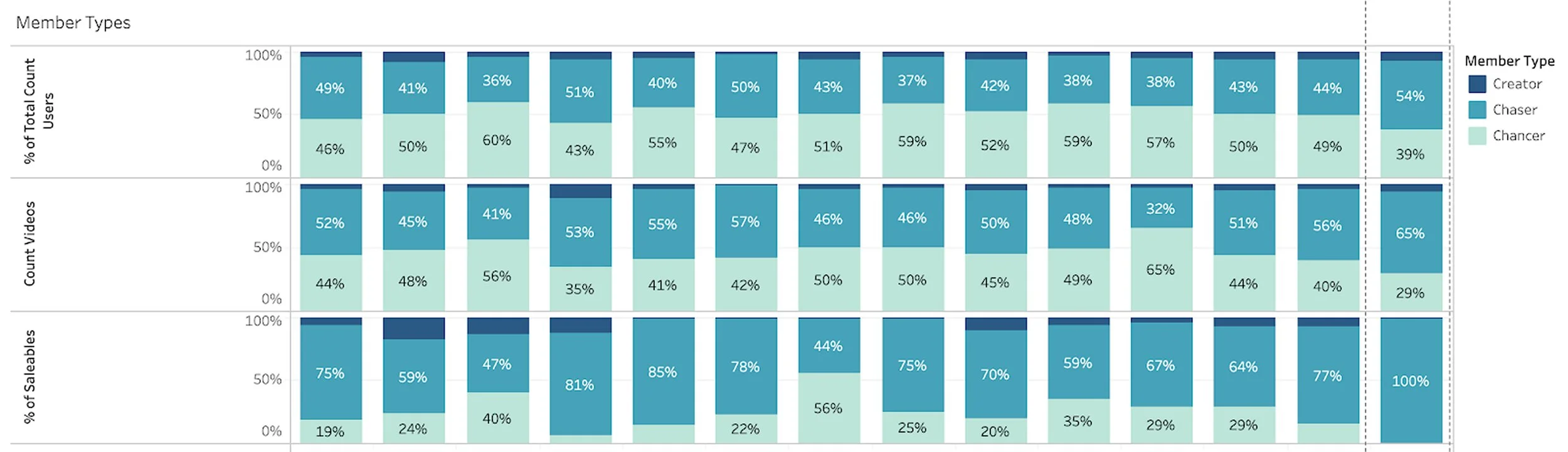
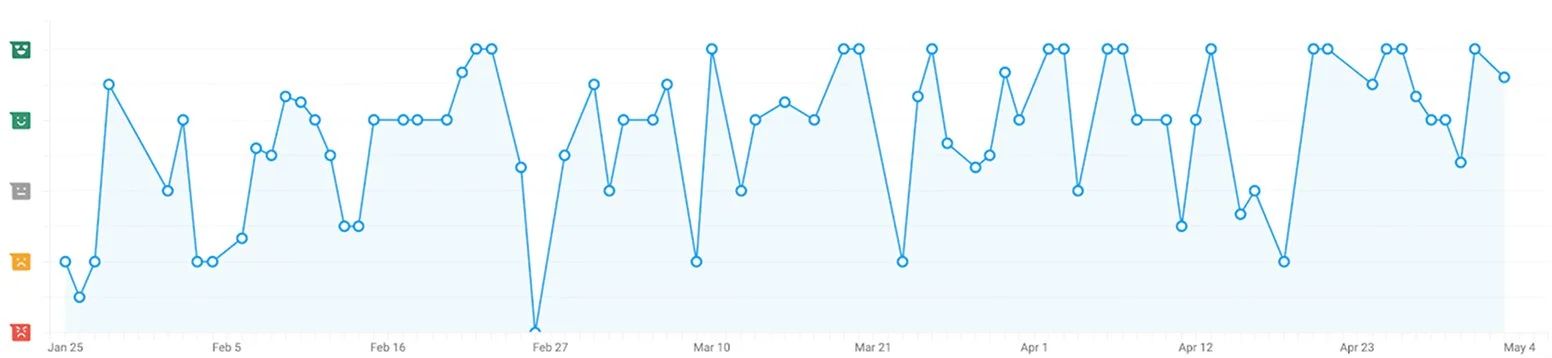
I started recording sentiments of users regularly uploading video to the platform in addition to a review of platform analytics. This allowed us to highlight key painpoints in journeys by key customer segments.
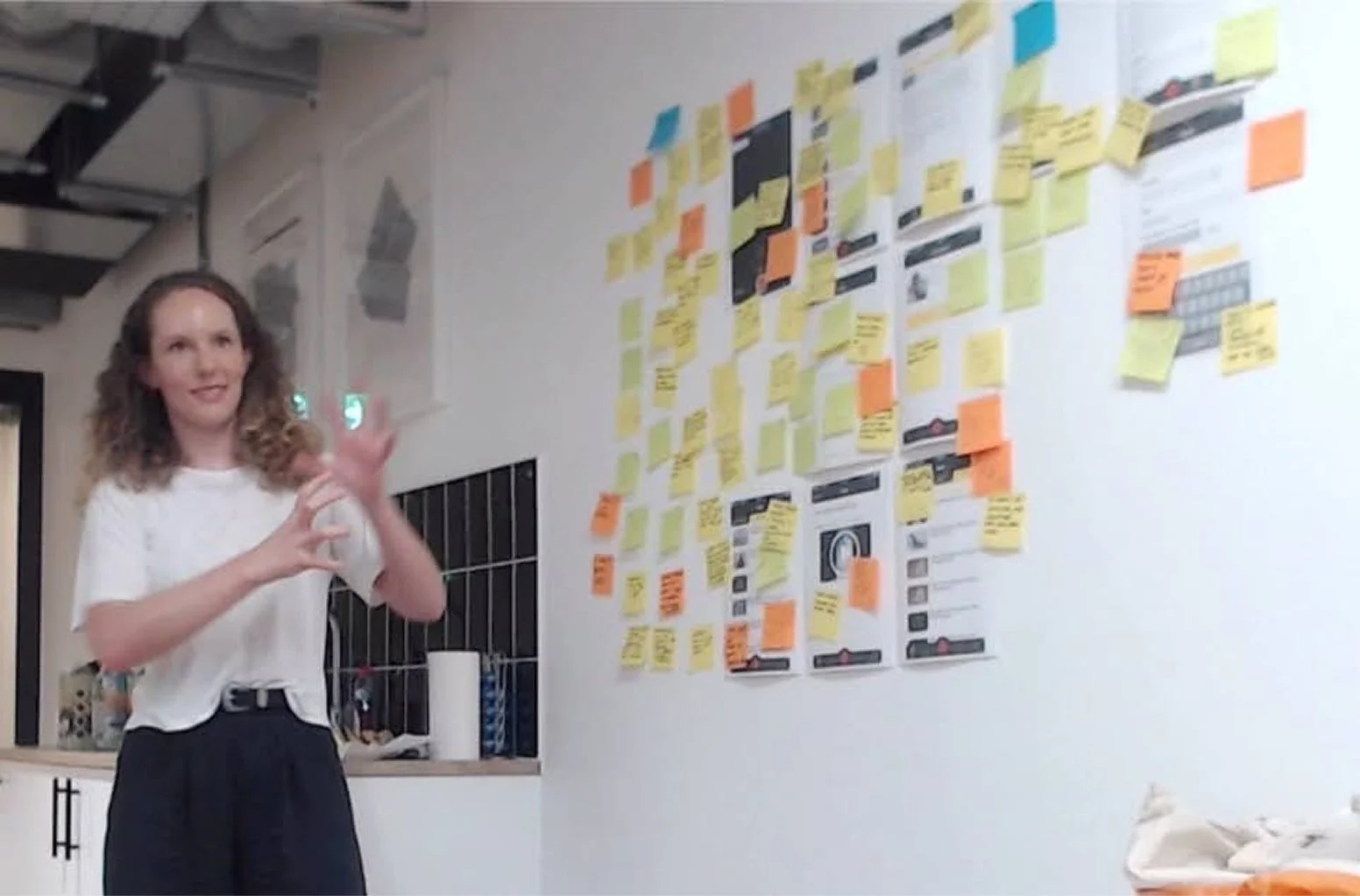
As part of this I gathered perspectives on customer attitudes towards submitting video to Newsflare, both in group settings and one-on-one interviews.
Doing this we identified four filmer archetypes:
We then summarised comments from key customer segments who responded positively to the PMF surveys we sent out to the user base.
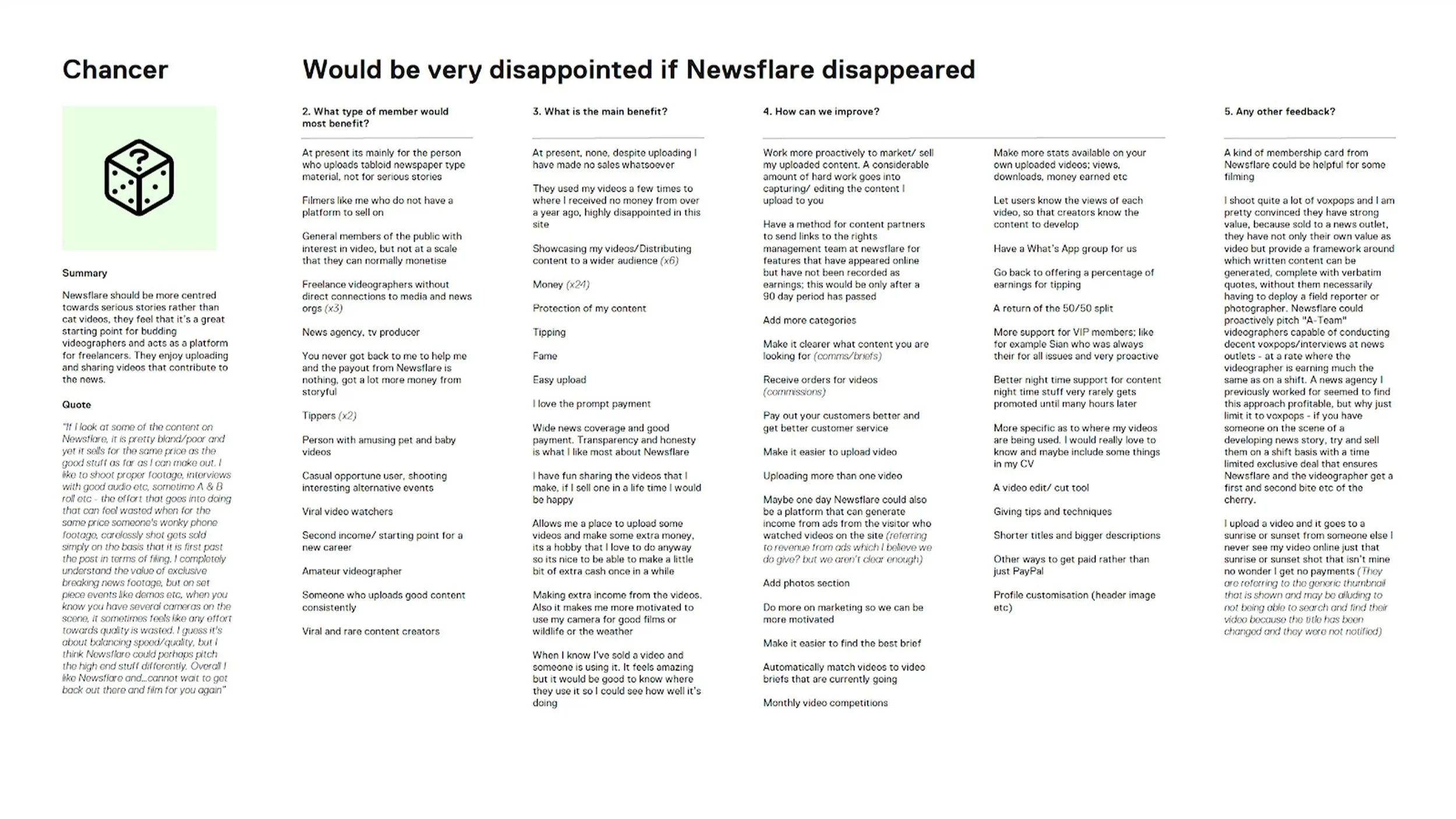
After realising how significant both Chasers and Content Partners were, and how engaged they were with the product, we knew we had to focus on them as key segments. Their main painpoints were around the perceived effort that went into them acquiring footage, and uploading it to Newsflare relative to other users.
We couldn’t change what buyers were ultimately interested in, but one key takeaway was the perceived effort of putting a video onto Newsflare. Many Chaser and Content Partner users confessed they filmed much more footage than they actually uploaded. Uploading only what they thought would sell, however, that belief didn’t always align with actual buyer behaviour. Because of the effort of uploading many Chasers and Content Partners were leaving money on the table.
“I like to shoot proper footage, interviews with good audio, etc, sometimes A & B roll, etc. The effort that goes into that can feel wasted when, for the same price, someone’s wonky phone footage that’s carelessly shot gets sold simply because it’s first past the post.”
Newsflare Chaser
Key user segments weren’t uploading video they were filming due to the perceived effort and time required to do so compared to the chance of selling a video. Until the cost of supply a video dropped for the user supply would continue to be constrained.
Problem to solve
Strategic Reframe
After having gotten a better understanding of the key issues it was clear that the user problem, and the technical issues with the existing upload flow were deeply intertwined. Any solution we were going to deliver had to focus on the following things:
Prioritised Key Segments: Any solution we went with had to be explicitly tailored towards maximising supply from Chasers and Content Partners.
Doesn’t Add to Technical Debt: We couldn’t simply add a new flow to the interface. Any work done had to consolidate existing flows and reduce the overall complexity for both engineering and users.
What also came out through the research phase was that filmers often had multiple videos of the same event. Potential opportunities existed here to reduce the amount of information we required from users as some written information could carry across multiple videos.
Another key aspect was that over 90% of our users were attempting to access the upload flow on mobile devices, and the interface was not yet responsive. This needed to be addressed.
Reduce Time to Upload: Given how users articulated pain in terms of time and effort any solution had to focus on cutting down the time taken, and effort required, from the user to upload a video.
Solution Execution
Initially we looked at an approach that allowed users to add a parent → child relationship to videos. This would look at reducing the overall effort involved for users, however, early wireframes and prototypes did not land well with users.
When talking with Content Partners at greater length we realised they hosted video they filmed on private systems that generated MRSS feeds we could scrape. Off the back of this knowledge we were able to quickly put in place architecture that scraped these feeds and imported entire libraries to be accessible via Newsflare. I worked closely with our Engineering team and a key Content Partner to build a proof-of-concept solution which we could then scale to all other similar users.
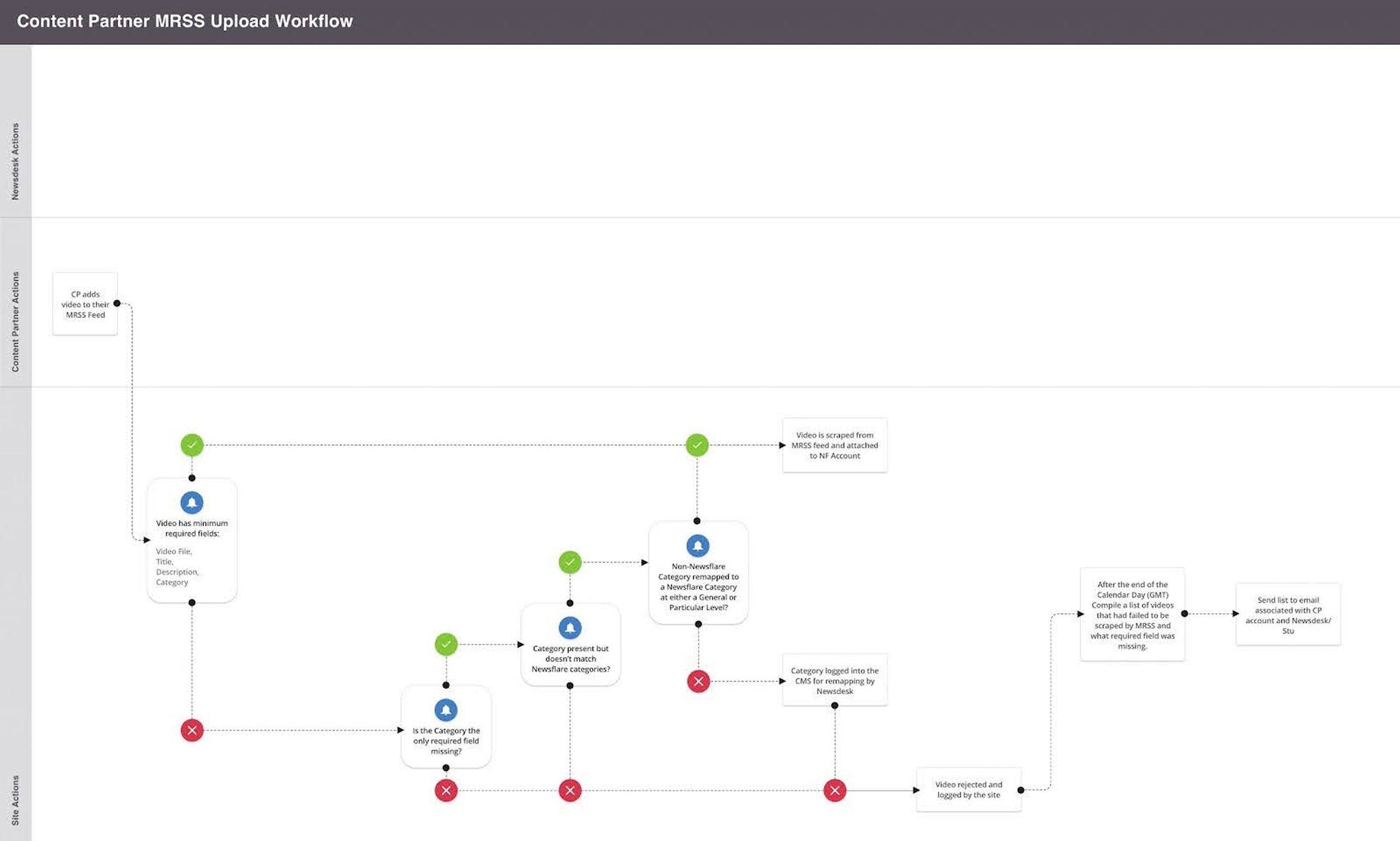
The first, very basic, flow I sketched out for the MRSS Feed.
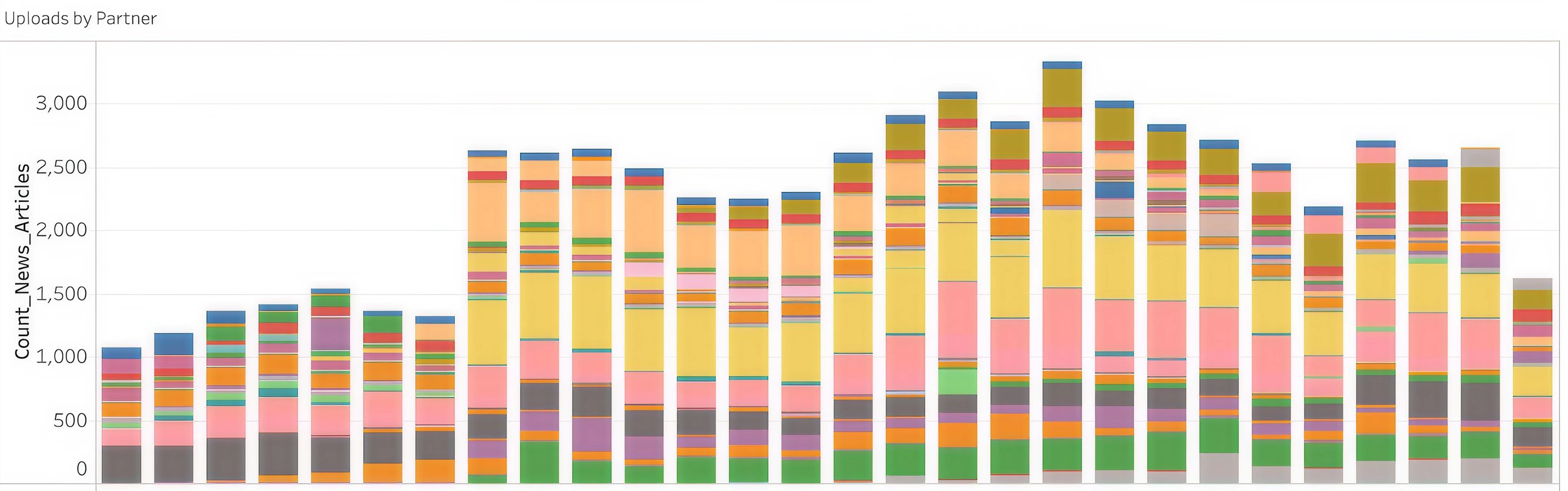
Rolling out this new solution completely side-stepped the conventional upload process and required a one-time setup from the Content Partner based on the nuances of their MRSS feed. The result was in a near doubling of videos we were receiving from Content Partners overnight.
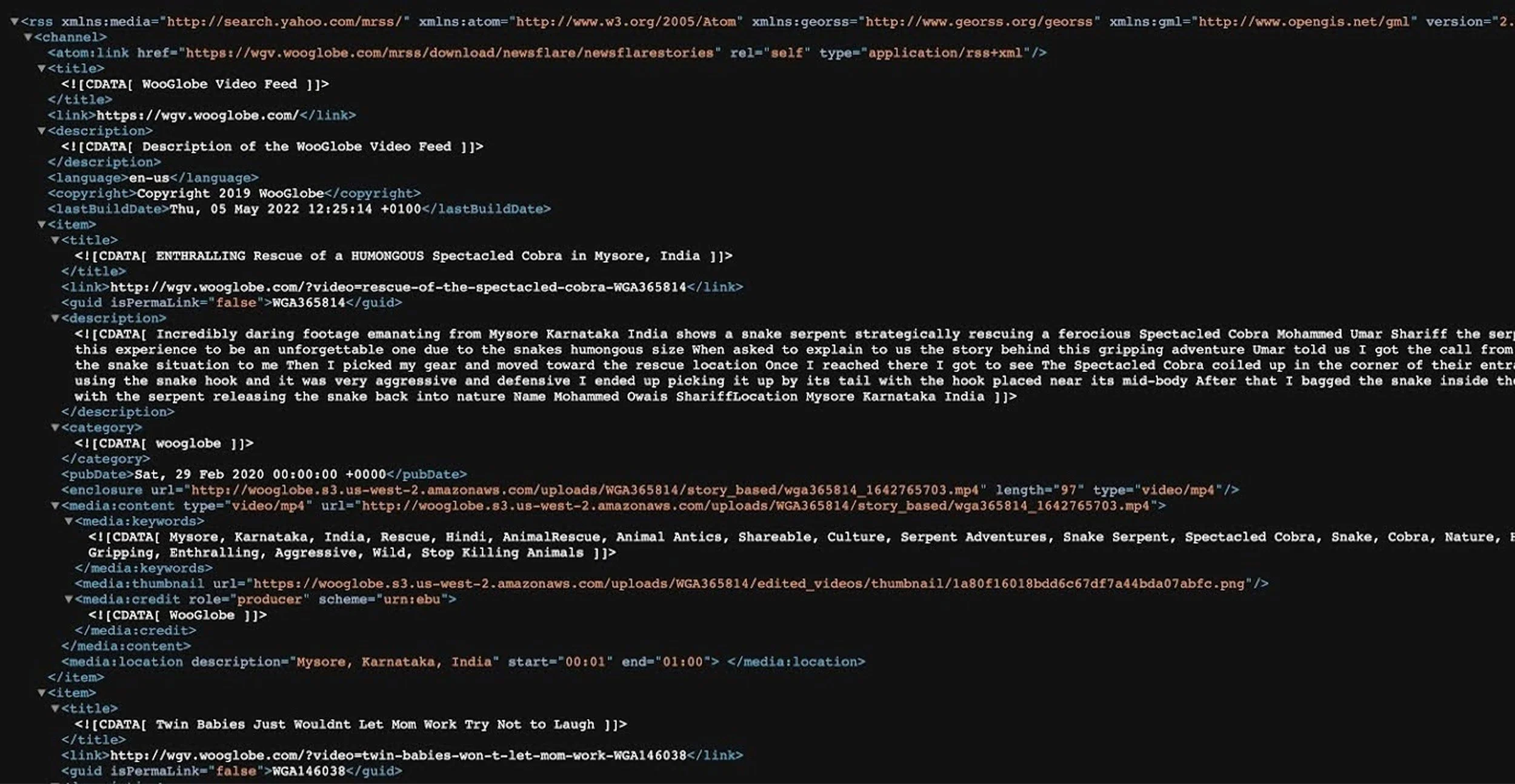
The initial MRSS Feed from the Content Partner I worked with to prototype the initial upload feed.
This was a massive win we made early on, but it didn’t really address the primary contributor of Saleables, the Chasers segment. They had to submit video using the interface and were hampered by friction, repetition, and lack of feedback.
Whilst the MRSS upload tool was being built I mapped the multiple upload and post-processing journeys. I then highlighted the opportunities to redirect users away from weaker or marginal funnels towards our core upload funnel. With the goal to consolidate all entry points and reduce duplication of upload funnels.
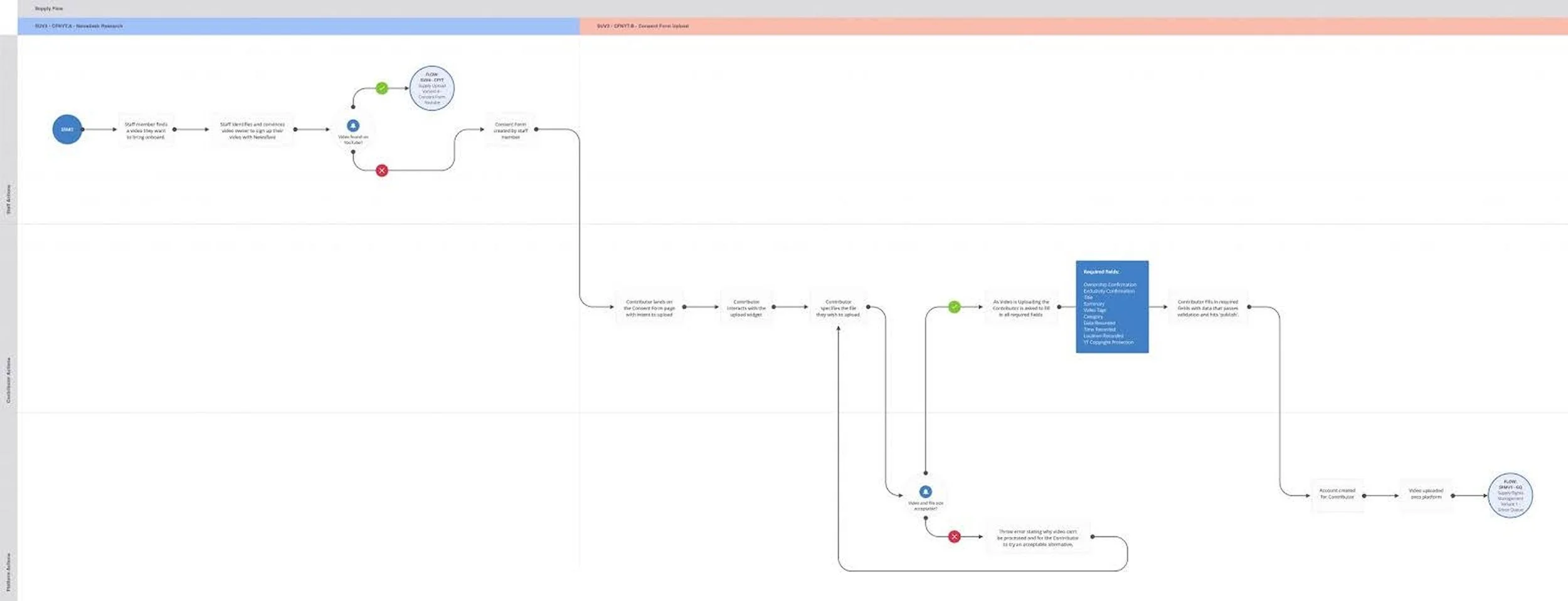
Revised default upload flow
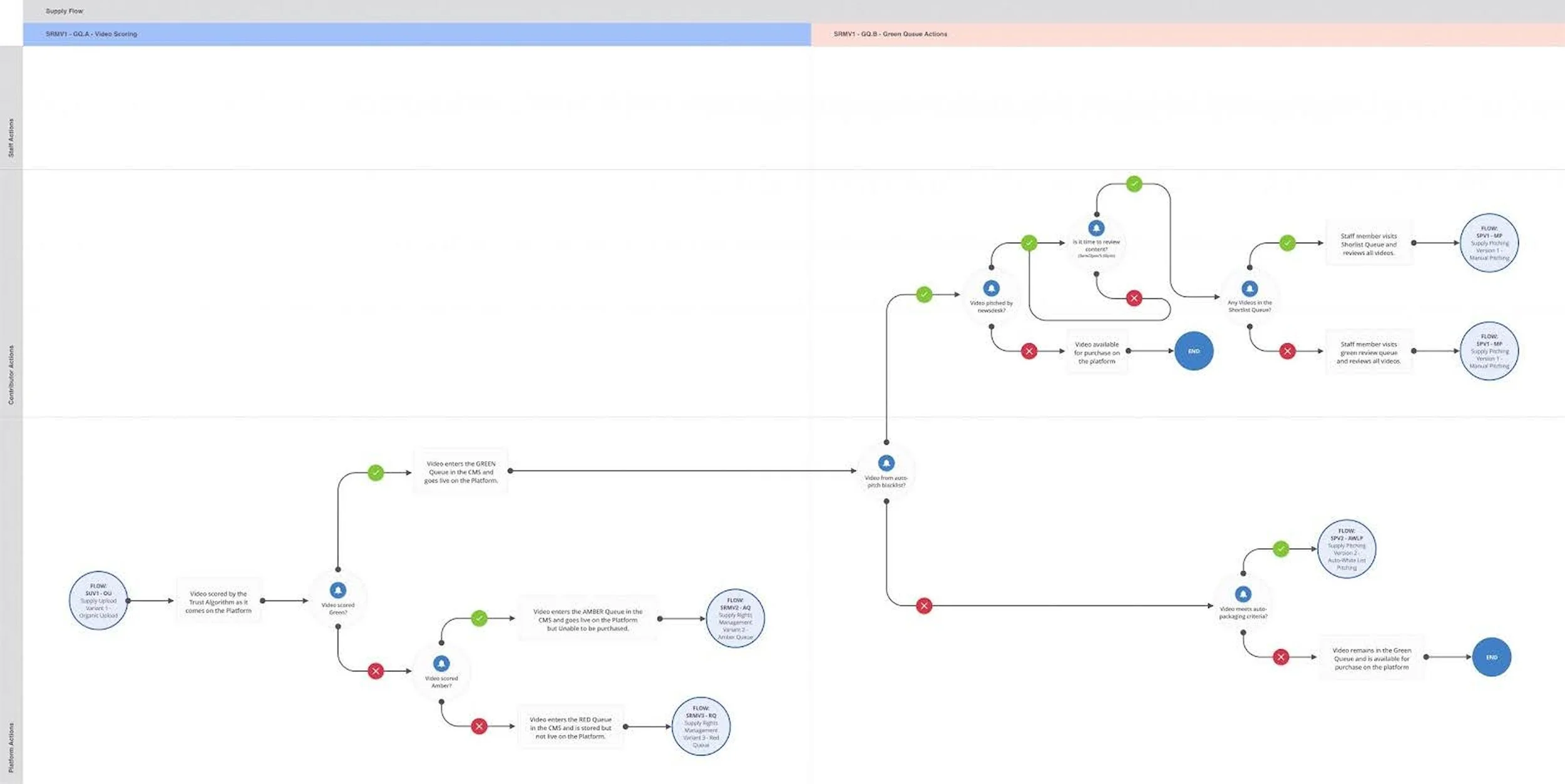
Consolidated post-upload flow
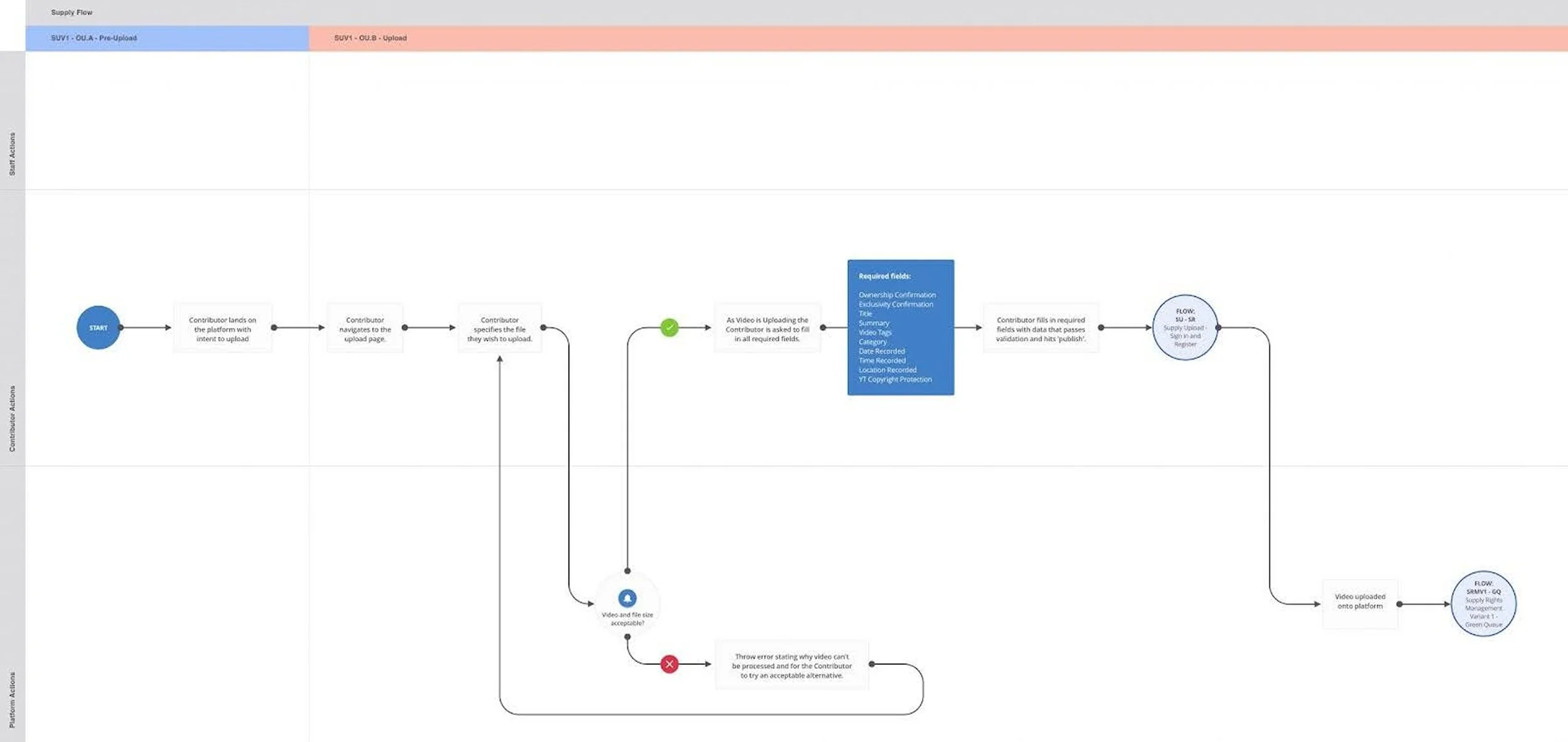
This massively cut down technical debt and increased the operational effectiveness of the platform with a corresponding increase in median monthly uploads from key customer segments.
Having done this we then began to run a series of A/B tests on the upload flow to try and learn more about what would help customers complete the required information at a quicker rate.
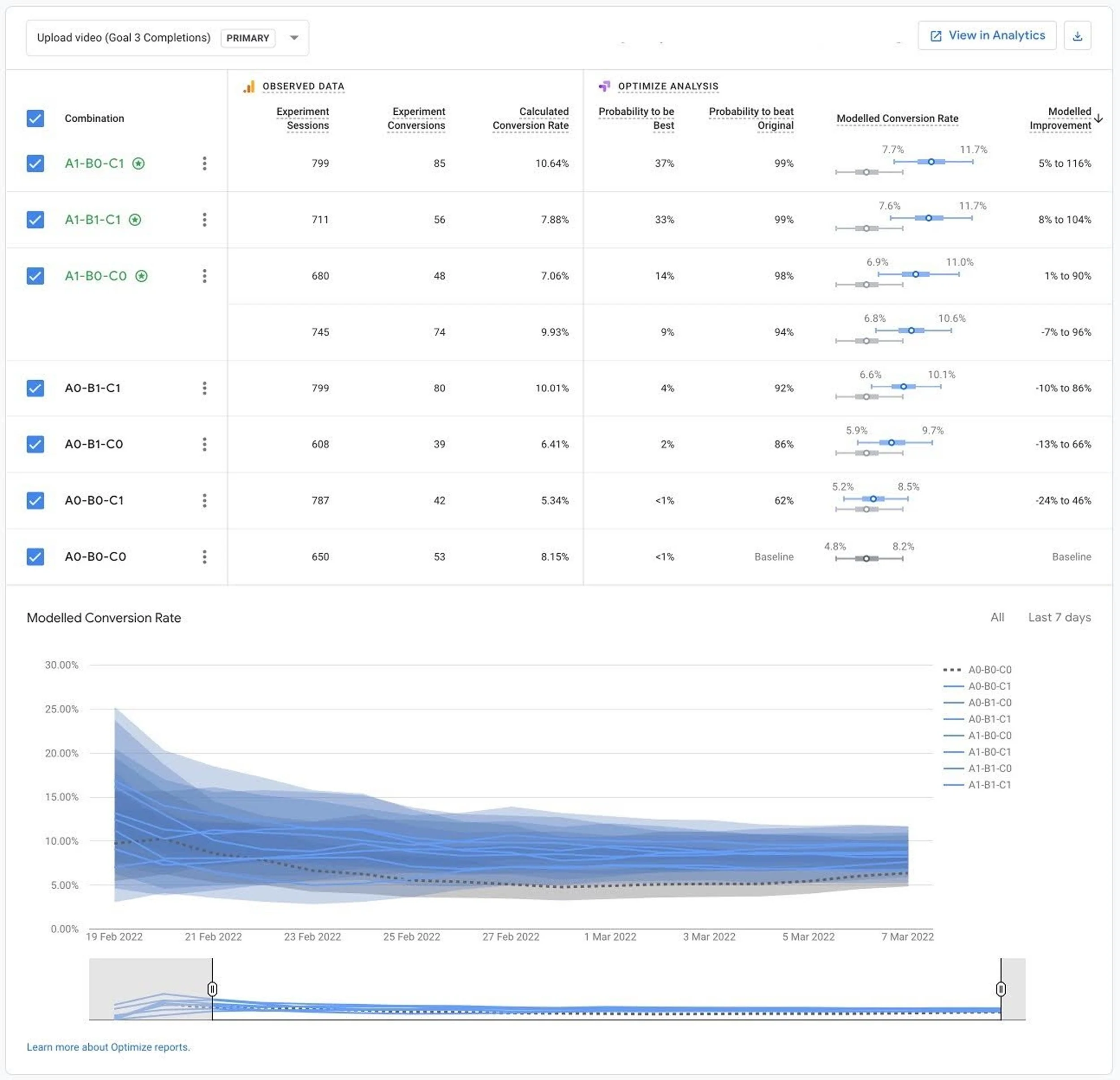
Revised outboud/consent form flow
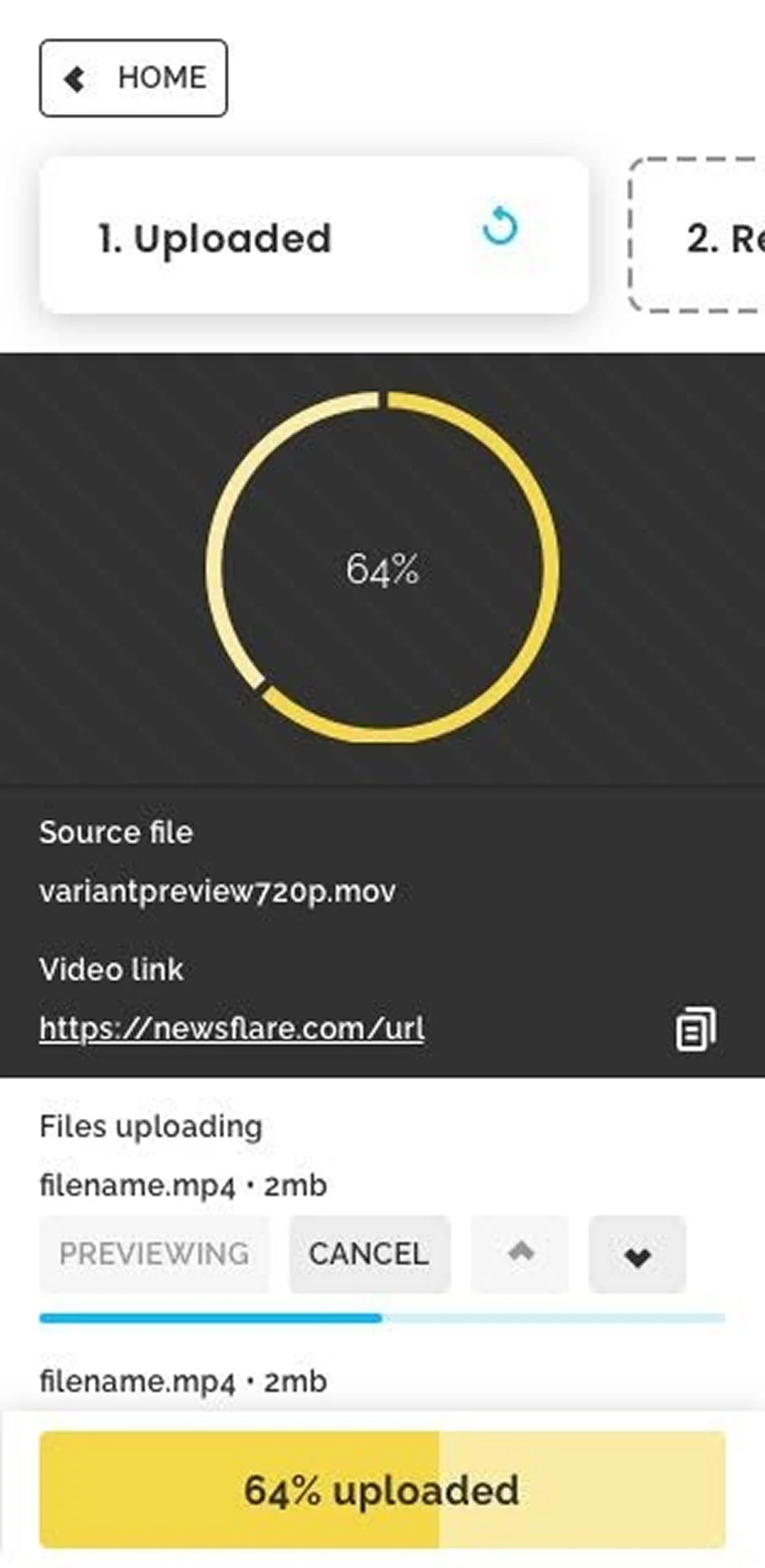
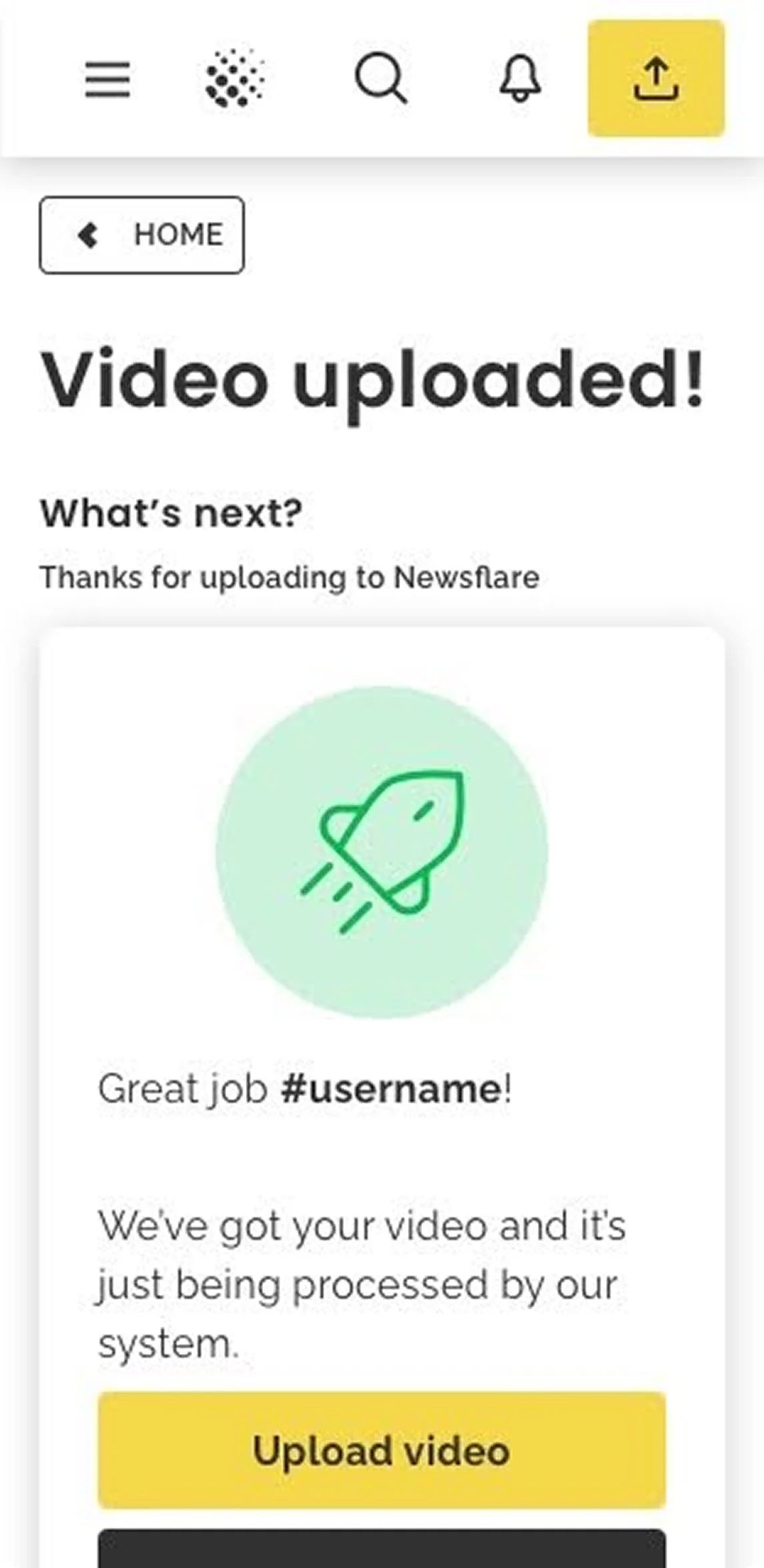
We took the learnings from these tests and redesigned the page mobile-first, chunking inputs, removing non-critical features, and creating pre-upload and post-upload experiences to bookend the journey with clarity and encouragement.
This became the only upload flow the company needed, and could be easily directed to from the various funnels Newsflare used to acquire video.

Constraints and Trade-offs
There were various constraints that existed
Outcomes
The changes led to sizeable quantitative, operational, and attitudinal gains for Newsflare. These included:
+50%
Increase in monthly uploads from Chasers. (Median. 2.4 → 3.6)
>200%
Increase in monthly uploads from Content Partners.
+8/10
Consistent CSAT scores in usability testing amongst key segments.
This radically improved the upload experience for both the business and our suppliers. Dramatically increasing the amount of saleable video now available to be passed on to buyers.
We also had clear avenues to explore how to further scale video supply amongst our core, non-Partner, suppliers, thanks to earlier experiments.
Improving the supply of Chaser video was strategically crucial to scaling a defensible supply base. Whilst we relied disproportionately on Content Partners, the loss of even one was always a big blow. Continuing to invest in improving the Chaser experience, therefore, was a clear natural next step.
5
Upload journeys in existence with the portal
Reflections
One test we ran prototyped a one-to-many upload model: allowing multiple videos to share a single metadata set. This experiment led to a 7x increase in uploads during testing.
This generated a lot of ideas it would have been interesting to explore given enough time:
Multi-session publishing: Many filmers shot video on location and later uploaded at home due to how involve metadata submission was. We could have explored staging the submission of the video and its associated data.
3rd Party Agent Uploads: Similar to the Content Partner approach we could have explored using Agents or Bots on apps like Signal or Telegram to receive video content in a chat based interface given many Chasers were already using these.
Varying Metadata by location: Certain types of information was more useful when receiving video from specific parts of the world or at particular times. Moving to a more dynamic approach to asking for this could have increased engagement and increased chances of a sale.
Success for this project was really down to successful segmentation of users and developing distinct product architecture for the highest performing cohorts identified.
The principle problems that needed solving had stemmed from treating users largely the same and inheriting a diffused approach to video submission. Solving both needed cross functional collaboration with senior-leadership, data, customer facing teams and engineering. Whilst we delivered a lot the problem space was still ripe for further development given the opportunity to explore it some more.
Timeline-Uploads: Many videos were shot in proximity to each other. Allowing users to recreate a timeline of events across multiple videos could reduce the information we required for each and provide additional context for media buyers.